NAIROBI — Medical experts from Africa and Asia are pushing for more research that reflects the realities of patients in developing countries, amid concerns that treatment guidelines for heart disease and diabetes rely heavily on evidence from Western populations.
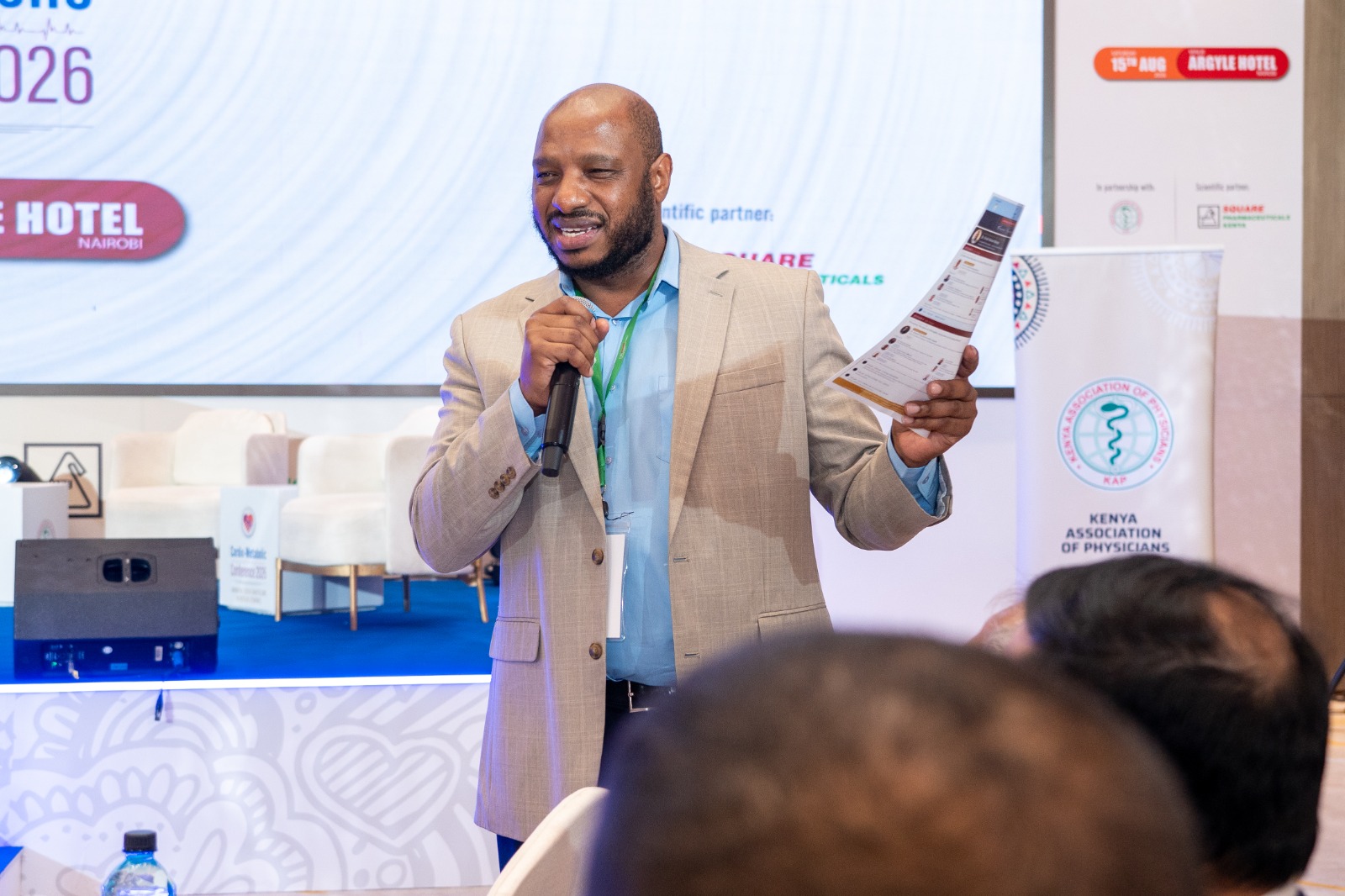
The issue emerged during the Cardio-Metabolic Conference 2026 in Nairobi, which brought together about 100 physicians, researchers and clinical experts from eight countries to discuss the growing burden of cardiovascular disease and type 2 diabetes in low- and middle-income countries.
Prof Elijah Ogolla of the University of Nairobi told the meeting that more than two-thirds of the global cardiovascular disease burden is found in low- and middle-income countries, yet regional treatment guidelines continue to rely heavily on evidence from Western patient populations.
The concern is whether evidence generated elsewhere sufficiently reflects the health, social and economic circumstances of patients in Africa and Asia.
The conference, organized by the Kenya Association of Physicians (KAP) in scientific partnership with SQUARE Pharmaceuticals Kenya, focused on the theme, “Advancing Cardio-Metabolic Care in Emerging Economies – Evidence, Innovation & Collaboration.”
It brought together 29 speakers and panelists who discussed diabetes treatment, cardiovascular disease, the connection between heart and kidney health, pharmaceutical innovation and access to medicines.
Prof Dr Indrajit Prasad of Dhaka Medical College and Hospital presented 24-week real-world data on a fixed-dose combination of empagliflozin and linagliptin, medicines used in the management of type 2 diabetes.
According to the findings presented at the conference, patients recorded a mean reduction in HbA1c — a measure of average blood sugar levels — of 3.55 percentage points and an average weight reduction of 7.17 kilograms, with no serious adverse events reported during the study period.
The findings were presented as part of discussions on how newer treatments could be incorporated into diabetes care in emerging economies.
But beyond the effectiveness of new medicines, experts also examined a more practical question: can patients afford them?
A panel led by Dr Vinesh Pravinchandra Vagela of Coast General Teaching and Referral Hospital explored sustainable pricing models, generic manufacturing and the use of task-shifting to expand access to newer therapies.
The discussion included SGLT2 inhibitors and GLP-1 receptor agonists, two classes of medicines increasingly used in the management of diabetes and related cardiovascular risks.
For countries with limited healthcare resources, experts said innovation must therefore be considered alongside affordability and the ability of health systems to deliver treatment.
The Nairobi conference also provided a platform for strengthening collaboration between African and Asian researchers and clinicians, with organizers arguing that the two regions can share research and experience in tackling similar healthcare challenges.
The conference was described as a step towards stronger South-South collaboration.
“By combining real-world evidence from Asia and Africa, we are shaping clinical guidelines tailored specifically to our local healthcare realities and patient populations.”
The programme, which ran from August 14 to 17, also included manufacturing facility tours, delegate exchanges and a gala dinner.
For the experts gathered in Nairobi, the challenge now lies in turning collaboration and research into evidence and treatment approaches.