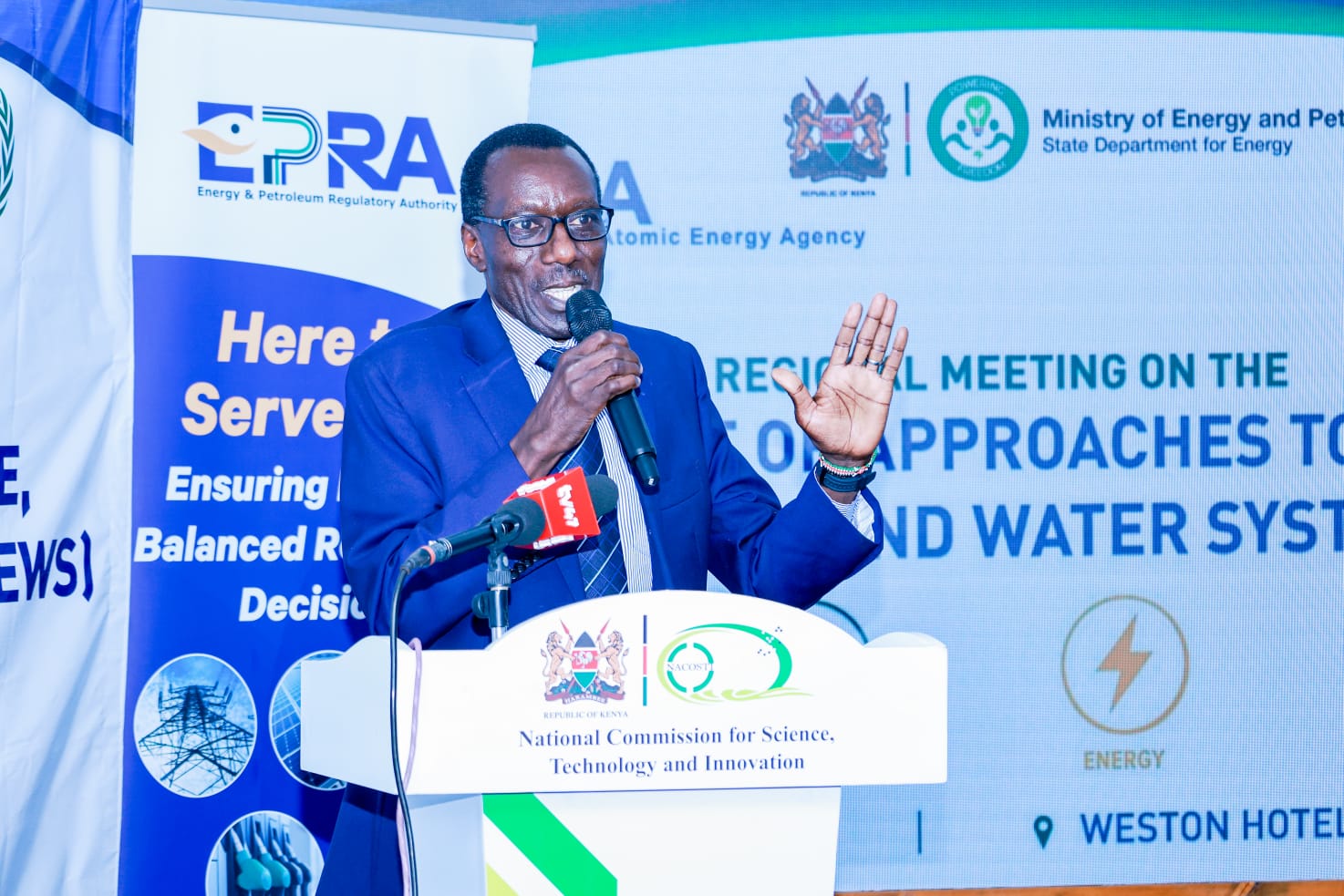
The Energy and Petroleum Regulatory Authority (EPRA) and experts from the International Atomic Energy Agency (IAEA) are meeting in Nairobi for a week-long regional meeting focused on strengthening integrated approaches to energy planning.
The meeting, which runs through Friday, is examining the Climate, Land-use, Energy and Water Systems (CLEWS) approach. This planning framework considers the complex interactions between energy development, climate change, land availability and water resources.
The discussions come at a time when Kenya is experiencing growing electricity demand and is seeking to ensure that investments in the energy sector adequately support economic growth while strengthening the country’s capacity to meet future energy needs.
Kenya has traditionally relied heavily on renewable sources of electricity, particularly geothermal, hydropower, wind, and solar. However, the government is pursuing a broader energy mix, including reliable low-carbon technologies such as nuclear power, as part of its long-term strategy.
According to the Principal Secretary for the State Department for Energy, Alex K. Wachira, the country’s Integrated National Energy Plan (INEP) requires policymakers to look beyond immediate energy requirements and assess how different energy choices will perform over the long term.
“The Integrated National Energy Plan (INEP) requires decisions to look beyond immediate needs and consider how different energy choices will perform over the long term,” Wachira said during the opening ceremony.
He said the Nairobi meeting provides an opportunity to examine how factors, including energy demand, climate change, water availability, land use, technology, and costs, interact in shaping the country’s future energy system.
Wachira said such integrated planning would help ensure that decisions being made today contribute to a secure and sustainable energy system in the future.
EPRA Pushes for Broader Energy Mix
EPRA Acting Director General Dr. (Eng.) Joseph Oketch said Kenya had established a strong foundation in renewable energy but needed to continue expanding its energy mix while adopting a multi-sector approach to energy planning.
“Kenya has built a strong foundation in renewable energy, particularly geothermal, hydro, wind and solar power, and there is a need to expand this energy mix to include emerging energy sources, while working with multiple sectors,” Oketch said.
He noted that the Energy (Integrated National Energy Plan) Regulations, 2025, provide a framework through which the country can guide the development of emerging energy sources.
Oketch said EPRA was also focused on strengthening public participation and building the technical capacity required to support informed decisions on Kenya’s long-term energy needs.
The emphasis on integrated planning reflects the growing complexity of energy development, where decisions on electricity generation must increasingly take into account factors such as availability of water and land, environmental considerations, technology choices and the cost of energy infrastructure.
IAEA Support for African Energy Planning
The Nairobi meeting is being held under the International Atomic Energy Agency’s African Regional Cooperative Agreement (AFRA), which brings together 50 African countries to advance the peaceful application of nuclear science and technology in support of development priorities.
Under AFRA’s energy programme, Technical Cooperation Project RAF2015 is supporting participating countries in strengthening their capacity for integrated energy planning.
Kenya is the national counterpart institution for Project RAF2015 through EPRA, which coordinates implementation of the project’s activities in the country.
The regional meeting is, therefore, providing participating countries with an opportunity to share experiences, strengthen technical capabilities, and learn from approaches being applied across Africa to address increasingly complex energy-planning challenges.
Nuclear Power in Kenya’s Long-Term Strategy
The discussions also come against the backdrop of Kenya’s growing interest in nuclear energy as part of its long-term industrialisation and energy strategy.
The press release notes that the International Conference on Nuclear Energy (ICoNE 2026), led by President William Samoei Ruto, reaffirmed Kenya’s ambition to develop up to 6,000 megawatts of nuclear power as part of the country’s long-term industrialisation strategy.
Kenya is also undertaking site identification and characterisation activities in Kilifi and Siaya counties, alongside efforts to strengthen the policy, legal and institutional frameworks required for the safe and responsible development of nuclear energy.
The planned expansion of the country’s energy mix is expected to require extensive technical assessment and coordination across different sectors, particularly as Kenya balances increasing energy demand with environmental sustainability and energy security.
Focus on Sustainable Energy Future
The engagement between EPRA and the IAEA underscores the importance of evidence-based planning as Kenya prepares for future energy requirements.
By examining energy planning alongside climate, land-use, and water considerations, the CLEWS approach is intended to help policymakers better understand the potential consequences and trade-offs associated with different energy choices.
For Kenya, the approach comes as the country seeks to maintain its position as a leader in renewable energy while exploring additional technologies capable of supporting reliable electricity supply over the long term.
The regional meeting is expected to strengthen cooperation among African countries and enhance the technical capacity needed to develop energy systems that can support economic growth while remaining reliable, affordable, and sustainable.
EPRA, established under the Energy Act, 2019, is responsible for the economic and technical regulation of Kenya’s electricity, renewable energy, petroleum, and coal sub-sectors. Its mandate includes tariff setting and review, licensing, enforcement, dispute resolution, approval of Power Purchase Agreements and Network Service Contracts, as well as oversight of the upstream petroleum and gas sectors.