
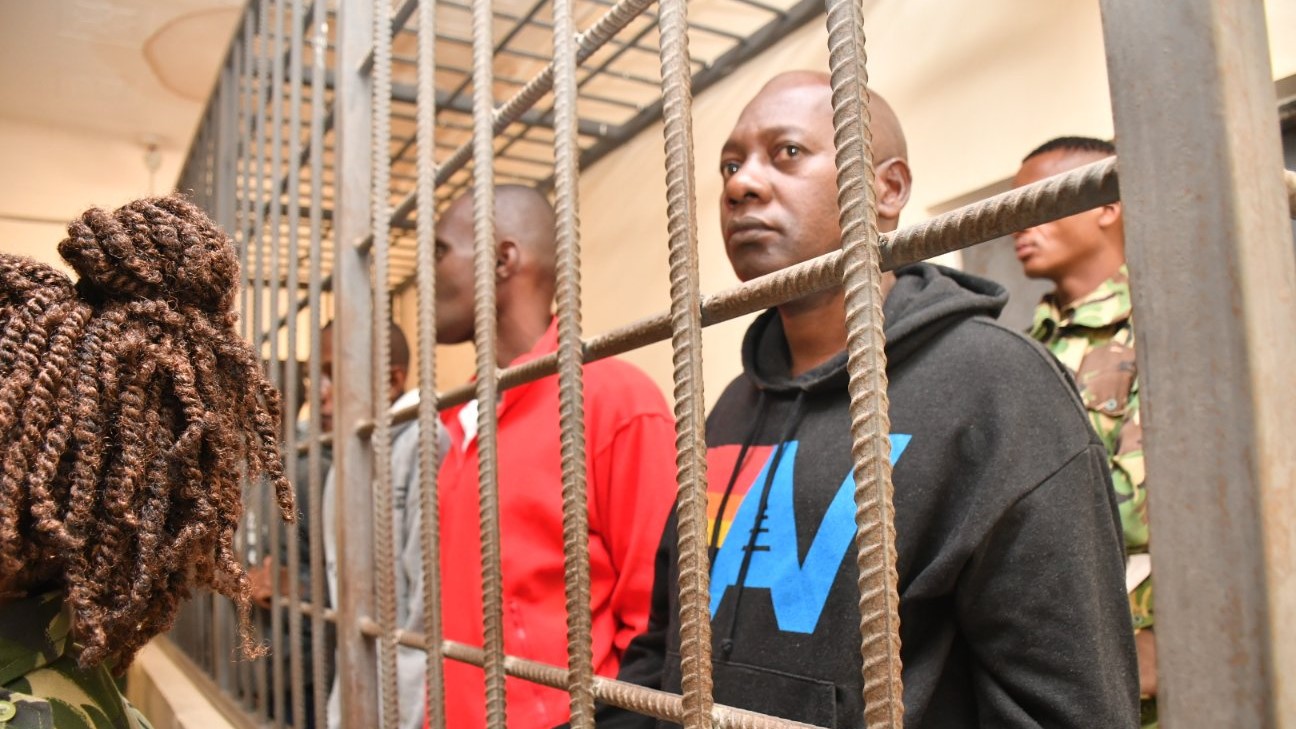
The 200-year sentence handed to Mackenzie may punish the man at the heart of the Shakahola massacre, but Kenya should resist any attempt to package that punishment as closure.
The conviction does not explain how hundreds of citizens disappeared into a forest, how an extremist religious operation functioned for years under the noses of state agencies, or why intervention came only after Shakahola had become a vast crime scene.
The institutional record is already damning. The Kenya National Commission on Human Rights Shakahola findings established that Good News International Ministries existed from 2003, was registered in 2010 and relocated to Shakahola in 2019, where indoctrination intensified.
The Senate Ad Hoc Committee report investigated circumstances surrounding the deaths and the role of the Kilifi County Security Committee.
More devastatingly, the Commission on Administrative Justice investigation found gross dereliction of duty among police and national government administrators and established that reports concerning Mackenzie’s activities were of public concern and the security operatives were seized of the matter.
The courts have now established criminal responsibility for 191 murders. Those findings make institutional complacency impossible to explain away.
Uncomfortable questions
Kenya therefore deserves to know who received the warnings, what was entered into police and intelligence records, what investigations were opened, who was assigned to them and why the danger was not neutralised.
Where was the Directorate of Criminal Investigations? Where were the chiefs, assistant chiefs, county security committees and intelligence officers? What did the political leadership in Kilifi know?
And where was Kenya’s religious establishment?
Mackenzie was not preaching secretly in some underground bunker. His registered ministry had branches, while his sermons were disseminated through Times TV and YouTube. Which religious leaders knew about his teachings? Which church organisations raised concerns? Were complaints made? If so, what happened to them?
The uncomfortable question can no longer be treated as impolite simply because it is uncomfortable. Were all these institutions spectacularly incompetent, or was somebody protecting Mackenzie?
That is not an accusation but a precise question an independent inquiry should investigate under oath, using records, witnesses and evidence instead of political spin.
Former Interior Cabinet Secretary Fred Matiang’i has argued in media interviews that unresolved security files were left open when the previous administration departed.
On the River Yala deaths, he has said the matter reached the National Security Council, investigators were instructed to keep files open and he is prepared to submit himself to scrutiny. In October 2026, he again called for an independent inquiry, saying he would testify under oath.
Matiangi’s challenge should be accepted. He should testify. So should relevant officials of both administrations. Former and serving Interior officials, DCI commanders, National Police Service leadership, intelligence officers, administrators and anyone who handled complaints or investigative files should be required to explain what they knew and what they did.
And an inquiry cannot credibly stop at Shakahola because the questions surrounding Kenya’s security establishment are much bigger.
Negligence and complicity
Consider the Kware bodies, as another example. Collins Jumaisi Khalusha, identified by investigators as the prime suspect in killings linked to bodies recovered from the Nairobi dumpsite, was arrested in July 2024.
Then, in an episode that would be laughable were the allegations not so horrific, such a high-value suspect reportedly escaped from Gigiri Police Station alongside 12 other detainees a month later . More than two years later, Interior Cabinet Secretary Kipchumba Murkomen says that Khalusha remains at large.
Really? How does that happen?
How does a suspect at the centre of such a grave investigation escape from police custody and remain unaccounted for nearly two years later? Who was on duty? What did subsequent investigations establish? Where does negligence end and possible complicity begin?
Then there is River Yala, where bodies became another unresolved national controversy and Matiang’i, once again, claims investigative files were left open.
There are the Gen-Z abductions and enforced disappearances that the National Police Service denies responsibility.
Not to be forgotten are the Kianjokoma brothers – Benson Njiru Ndwiga and Emmanuel Mutura Ndwiga. Six police officers were charged with their murders, and a pathologist told the High Court that their injuries were inconsistent with the police account that the brothers had jumped from a moving vehicle.
These cases are different and must not be lazily conflated. The evidentiary circumstances, administrations involved, allegations and legal proceedings are not identical.
But collectively they justify a much bigger question that Kenya has postponed for too long – what happens inside the security architecture when warnings are ignored, citizens disappear, bodies are recovered, suspects escape custody and definitive answers become so extraordinarily difficult to obtain?
Kurunzi News believes Kenya’s case has surpassed the threshold where another internal investigation or parliamentary report is inadequate.
The country needs an independent, broad-based public inquiry into institutional failure, unresolved deaths, alleged enforced disappearances and accountability within the security sector.
Such an inquiry must have sufficient independence and authority to summon serving and former officials, obtain relevant records, reconstruct chains of command and establish what information reached which offices. It should investigate whether cases stalled because of negligence, incompetence, institutional obstruction, political interference or protection by people with power.
Nobody should be exempt because of office, rank, administration or political affiliation. Let the former government account for its years. Let the current one account for its time. Let security chiefs account for their institutions.
Where accusations against officers are unsupported, an independent process should clear them. Where evidence reveals culpability, appropriate investigative and judicial processes should follow.
Kenya cannot continue discovering graves, recovering bodies, documenting disappearances and watching families grow old waiting for answers while responsibility dissolves somewhere inside the bureaucracy.
The judiciary has dealt with Mackenzie. Shakahola now demands a reckoning with the machinery of government that failed to prevent the massacre despite the warning signs documented by public institutions.
A genuinely independent public inquiry should begin there and follow the evidence wherever it leads.
Kenya’s security establishment has spent too much time answering disturbing national questions with investigations whose conclusions too often remain elusive. This time, the institutions themselves must be called to account, placed under oath and required to answer to the Kenyan people.