With the most recent budgetary adjustments, the Treasury signaled a decrease in the amount of low-cost State-backed mobile loans by cutting the Hustler Fund’s budget by nearly half to KSh5 billion.
This comes from the KSh10 billion that Njuguna Ndung’u, the Treasury Cabinet Secretary, first set aside in June for the Hustler Fund—officially named the Financial Inclusion Fund—for 2023–2024.
The Fund was created in accordance with the Kenya Kwanza coalition’s Bottom-Up election campaign pledge to make it easier for small enterprises and low-income individuals to obtain affordable loans over the phone.
One of President William Ruto’s campaign pledges, the Hustler Fund, received KSh20 billion in the previous fiscal year, which concluded in June.
The budget cut coincided with the introduction of new product lines by Dr. Ruto, such as the Hustler Fund, which is intended primarily for informal merchants and requires group registration in order to be eligible for loans.
“I think it is just in line with the austerity measures that the government is taking,” said Elizabeth Nkukuu, the Acting CEO of the Hustler Fund, adding that the move might also have been taken to re-balance the portfolio.
According to John Mutua, a program coordinator at the research tank Institute of Economic Affairs, the Fund cut, like many other development-related expenses, is usually a low-hanging fruit for a government strapped for cash.
“For budget cuts, the first culprit is always development,” said Mr. Mutua, noting that such spending can always be deferred while recurrent spending like wages and debt repayments cannot wait.
The budget drop comes after a tumultuous time marked by small- and medium-sized businesses’ (SMEs’) microloans defaulting under the Hustler Fund, a key component of the government’s Bottom-Up Economic Transformation Agenda (BETA).
This is higher than that of commercial banks, saccos, and microfinance banks, with a default rate of 29% as of August. This reflects the difficulty mobile lenders encounter when making unsecured loan advances to the unorganized sector.
Though it used to be over 30%, the government is hopeful that the default rate has been falling lower.
“It is doing pretty well compared to many other funds that the government has run in the past. We have developed new products which are tied to the Hustler Fund platform, which then means that if you don’t repay on time you cannot access another and this is helping a lot,” Moses Banda, an advisor to President Ruto on matters of financial inclusion, told the Business Daily in an earlier interview.
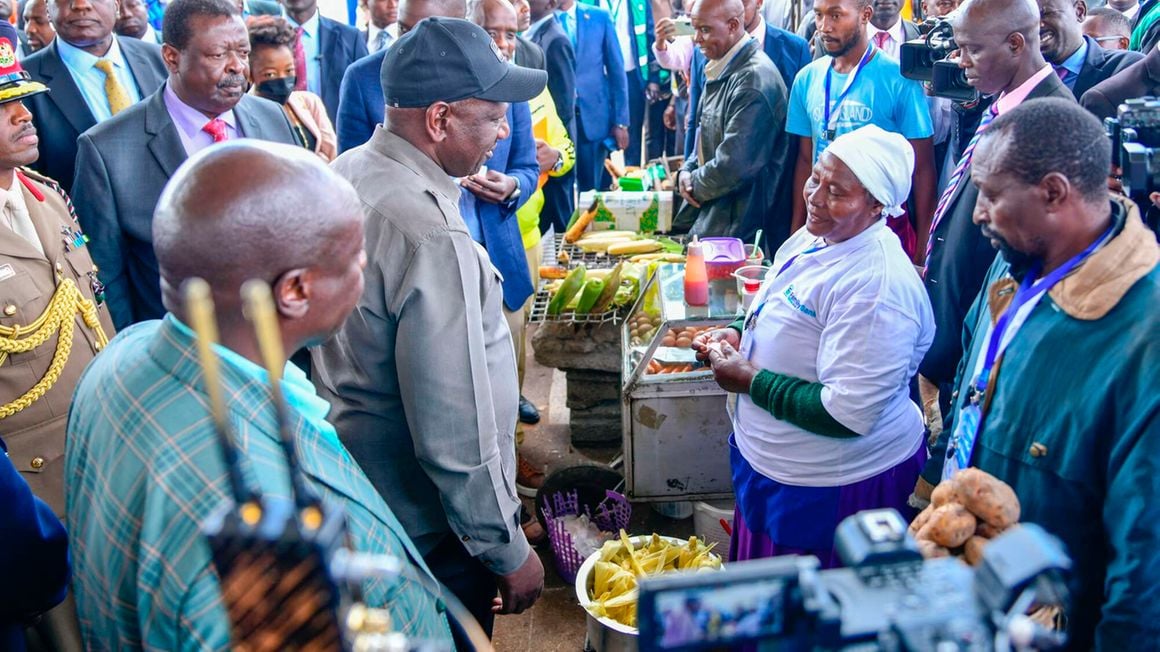
However, the head of state has taken notice of this delinquency and is relying on the inclusion fund to forward his campaign agenda of elevating the “hustlers,” who include vegetable dealers (mama mboga) and motorcycle taxi operators (known as boda boda).
“The Hustler Fund is not for free and should be returned to the government,” said President Ruto in May while in Embu County.
“We know there is a percentage of Kenyans who are yet to repay their debts but I can tell you that they will not run far. We have put money in the business loans account but they will not get the loan until you clear your arrears,” added Dr Ruto.
According to the government, credit scoring for the Hustler Fund is examined every 4 months to make sure risk is handled carefully. 21,245,811 consumers had received personal loans totaling KSh36.87 billion, according to the most recent data. There is an 8% yearly interest rate.
Additionally, these borrowers had saved KSh1,843,656,056 under this scheme, which aims to promote a culture of saving. KSh155.6 million more had been given to 50,011 chamas or groups. KSh7,781,505 had been saved by these groups.
The group loan product has a 6 month repayment schedule, and borrowers can choose to pay in full or in installments.
The Central Bank of Kenya reports that although the government has been lending through KCB and Family Bank at an eight percent rate, it has been borrowing at higher rates, with the yield on the 91-Day Treasury Bill, a short-term government security, reaching a high of 15.11%.