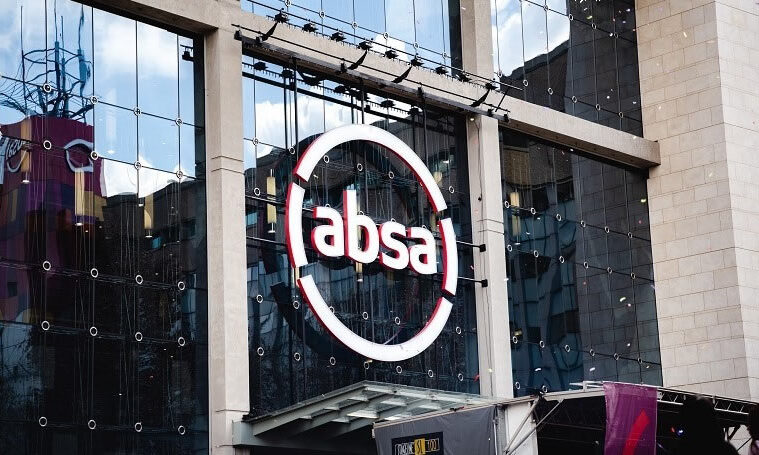
Absa Bank Kenya Plc posted a decline in Half-Year Net Profit with earnings per share falling 9.8% to KSh1.94, with net income coming in at KSh10.5bn.
The performance was characterised by a 5.4% decline in net interest income to KSh 21.1bn, with non-interest revenue contracting by 10.2% to KSh 8.2bn.
Foreign exchange trading income slackened by 28.1% to KSh 2.3bn, as other operating income thinned by 24.9% to KSh 1.3bn. The slide in profit before tax was partly braced by a single-digit rise in operating costs excluding impairments and lower loan loss impairments of 4.1%, to KSh 14.2bn .
The Absa Bank Kenya Group’s Board of Directors has recommended an interim dividend of KSh 0.50 per share-an increase of, with the book closure slated for 18th September 2026.
Absa Bank Kenya interest and non-interest income
Absa Kenya Group interest income at KSH 21.1bn, a fall of 5.4% was partly attributable to a sustained slowdown in interest income on loans and advances to KSh 20.3bn.
Notably, the Absa Bank Kenya’s loan book rose to KSh 329.9bn, as it expanded disbursements to its priority sectors. Interest on government securities declined to KSh 6.0bn, partly driven by lower government bond yields (investment in government securities remained largely flat at KSh 120.5billion.
On the other hand, interest income on deposits and placements due from banking institutions rose by 13.4% to KSh 1.0bn.
The decline in interest expenses helped contain the slide in net interest income, contracting to KSh 6.2bn, aided by a lower interest expense on customer deposits at KSh 5.3bn. This is due to cheaper deposits as the lender optimized its deposit structure. Other interest expenses increased to KSh 121.0m, despite borrowed funds and balances due to Group falling.
Interest expenses on deposits and placements with banking institutions narrowed to KSh 766.1m, while deposits due to banks jumped by 35.8% to KSh 24.9bn.
Consequently, the Group’s net interest margin narrowed from 10.1% in 1H25, according to estimates by Standard Investment Bank research desk.
In addition, Absa’s New Business income (which includes non-banking subsidiaries) jumped 20% to KSh 2.9bn. Total fees and commissions income advanced by9.4% to KSh 4.6bn.
In particular, other fees and commissions income rose by 8.1% to KSh 3.9bn, with fees and commissions income from loans and advances at KSh 697.7m on the back of improved credit demand in the period.
Staff and director costs increased by 19.5% to KSh 7.6bn (Absa disclosed that it incurred a one-off voluntary exit cost earlier in the year
Overall, Absa’s cost-to-income metric deteriorated to 41.2% from 36.4% in 1H25, with operating profits before impairments declining to KSh 17.2bn,
Absa Bank balance sheet health status
The Absa Bank Kenya Group’s asset quality improved over the period, with the NPL ratio at 10.1% from 13.0% in 1H25. In addition, gross NPLs eased to KSh 36.4bn, partly due to the resolution of key names, recoveries, as well as increased lending.
While healthy, the Group’s Return on Equity (ROE) fell21.7% from 26.5% in 1H25 (partly linked to a faster jump in shareholders’ equity to KSh 98.0bn, coupled with a decline in net earnings.
Absa Bank Kenya’s cost-to-income ratio deteriorated over the period, though it remains among the best compared to its peers as it leverages tech to improve efficiency.
Management noted that the lender achieved back-office automation levels of 71% as of 1H26 vs 62% in 1H25.