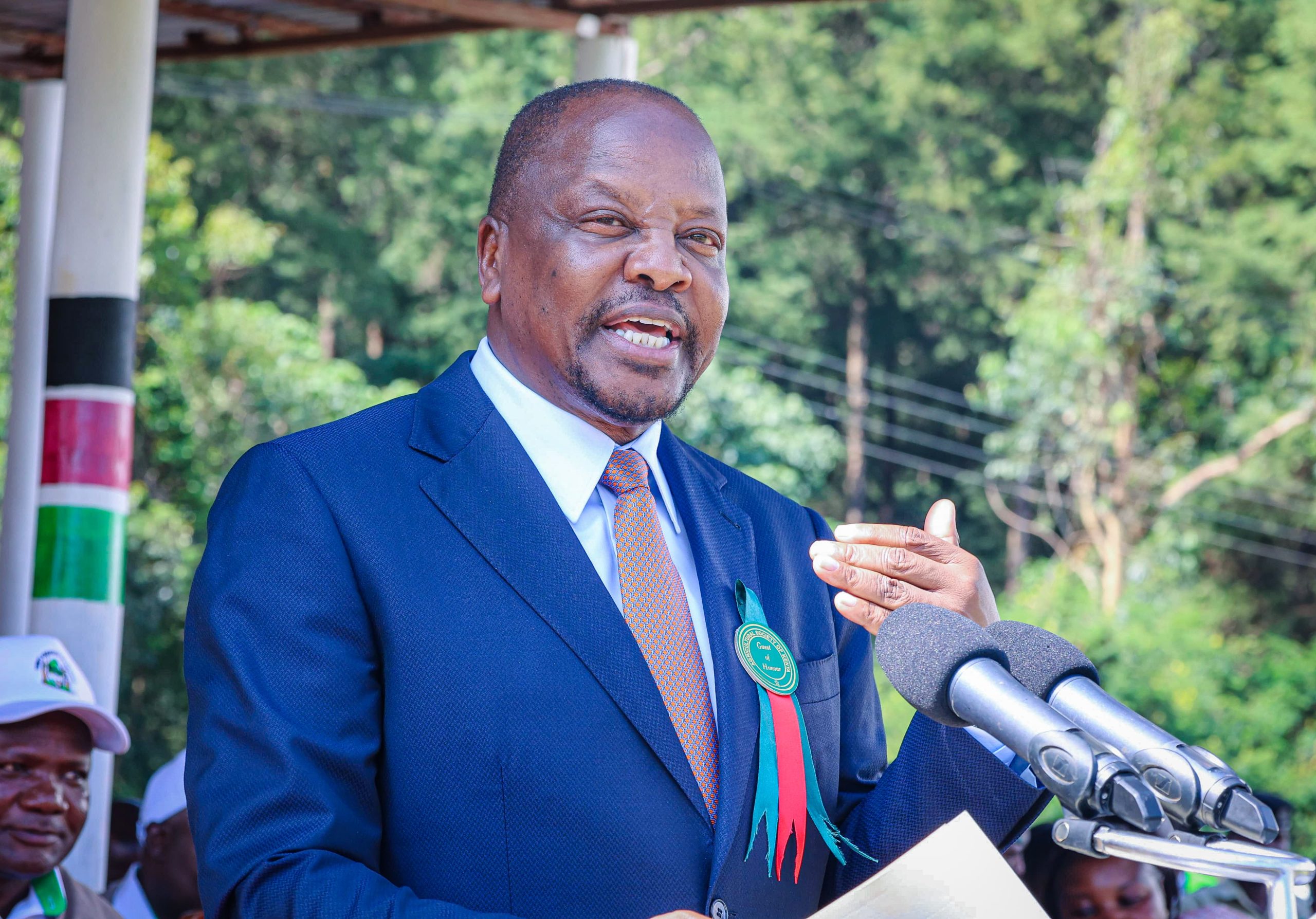
Agriculture Cabinet Secretary Mutahi Kagwe has called for a national policy rethink to curb uncontrolled land subdivision, warning that shrinking farm sizes are undermining food security and long-term agricultural competitiveness.
“In some cases, a single acre is divided among six beneficiaries. That model cannot sustain commercial agriculture,” he said, urging a broader conversation on strategic land use. “Countries with strong agricultural sectors avoid excessive subdivision. Kenya must consider similar safeguards.”
Agriculture contributes roughly 20% of Kenya’s gross domestic product and employs a majority of rural households, according to government data. Analysts have long warned that generational land subdivision has reduced average farm sizes, limiting economies of scale and discouraging investment in irrigation, mechanisation and technology.
Kagwe also pressed national and county authorities to foster an investor-friendly climate, arguing that private capital is essential to revitalising rural economies.
“Investors come to make returns. That is what drives job creation and agricultural transformation,” he said, calling for streamlined licensing, predictable regulations and reduced bureaucratic delays.
Tackling climate change
He highlighted the untapped potential of the six counties under the Jumuia ya Kaunti za Pwani bloc, Lamu, Tana River, Kilifi, Kwale, Taita Taveta and Mombasa, citing favourable conditions for tree crops, livestock and export-oriented production.
However, he noted persistent challenges including youth unemployment, declining legacy cash crops and climate vulnerability. Reform priorities
Kagwe outlined priorities for reform, including climate-smart agriculture, data-driven extension services, youth-led agribusiness, structured public-private partnerships and stronger county-national coordination.
He emphasised local value addition, questioning why coastal farmers export raw cashews and coconuts instead of processed, branded products.
National agencies such as the Kenya Agricultural and Livestock Research Organisation and the Agriculture and Food Authority, he said, are aligned to support research, regulation and market development.
“This is not about projects,” Kagwe said. “It is about building a climate-resilient, youth-driven and globally competitive agricultural economy.”