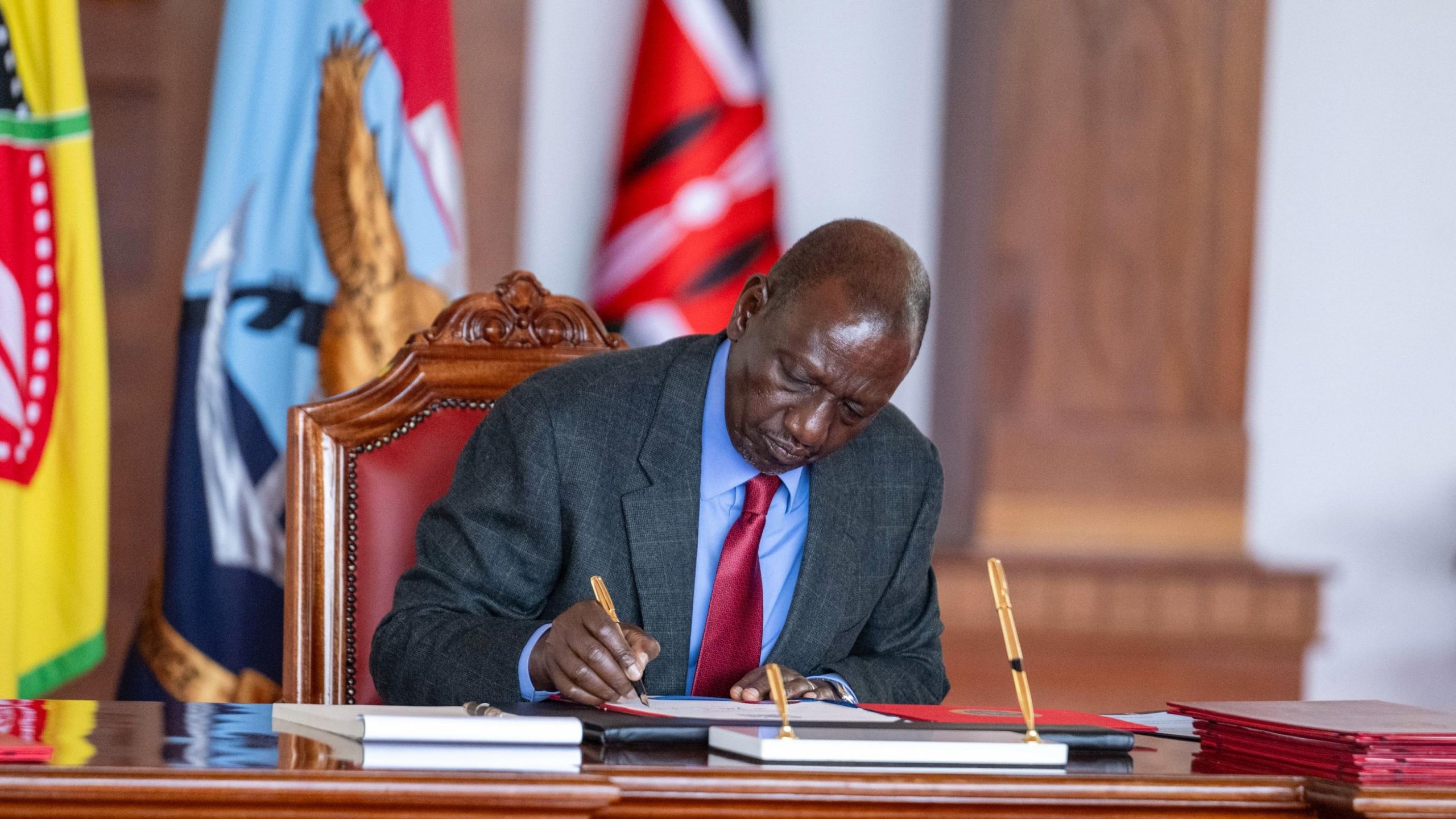
After assenting to the Central Bank of Kenya Amendment Bill, 2026, President William Ruto believes the new law has come at a critical time for the country’s financial system.
According to the head of state, the bill, now expected to operate as a law passed by parliament, will help to modernise the country’s monetary policy framework.
“Assented to the Central Bank of Kenya (Amendment) Bill, 2026, ushering in sweeping reforms aimed at strengthening the CBK’s capacity to safeguard financial stability, improve banking oversight, and modernise the country’s monetary policy framework,” Ruto said.
“The new law introduces a distinct legal framework separating the Central Bank’s routine monetary policy operations from Emergency Liquidity Assistance (ELA). The move will improve Kenya’s preparedness to respond to financial crises while protecting taxpayers and the banking sector,” he added.
Why the law is critical
The president highlighted why the framework is a critical move for the country’s financial stability and environment.
“Under the amendment, ELA can only be extended to banks that meet strict conditions on solvency, viability, and systemic risk. The provision aims to separate ordinary liquidity management from extraordinary interventions during periods of financial distress,” the president’s statement added.
“One of the key reforms elevates financial system stability and sound banking regulation as secondary objectives of the Central Bank, while retaining price stability as its primary mandate. The law formally recognises the CBK’s role in promoting the integrity, resilience, and proper functioning of Kenya’s financial system.”
Approval of nominees
The law also provides that the nominees for deputy governor positions will be subject to vetting before they are appointed.
“Additionally, to enhance governance, nominees for deputy governor positions will now be vetted and approved by the National Assembly before appointment. The provision aligns their process with that of the governor and reinforces parliamentary oversight of senior leadership at the monetary authority,” it continued to say.
The amendment also gives statutory backing to the CBK’s training mandate through the Central Bank of Kenya Institute of Monetary Studies. It also provides a legal framework for collaboration with national, regional, and international institutions to enhance knowledge sharing and cross-border cooperation.
The law further updates various provisions by replacing references to the defunct Deposit Protection Fund Board with the Kenya Deposit Insurance Corporation, bringing the Act in line with the current deposit protection framework.
It also expands legal clarity on CBK’s authority to deal in gold and other precious metals as part of reserve management. This will support the growth of Kenya’s mining sector and align Kenya with practices in Tanzania, Ghana, and South Africa.
Parliamentary Pensions Amendment Bill signed
Ruto also signed into law the Parliamentary Pensions (Amendment) Bill, 2023, bringing in reforms that align the parliamentary pension framework with the Constitution and extend benefits to both Members of the National Assembly and the Senate.
“The legislation updates the Parliamentary Pensions Act of 1983, which became outdated after the promulgation of the 2010 Constitution established a bicameral Parliament. The new law formally recognises both the National Assembly and the Senate in the administration of parliamentary pensions and ensures senators are entitled to benefits under the same framework as MPs,” the head of state said.
“Among the major reforms, the law redefines ‘child’ to mean a person below 18 years, up from 16 years, to conform with the Constitution. The Act further reconstitutes the Parliamentary Pensions Management Committee and the Appeals Committee to include representation from both Houses, reflecting Kenya’s bicameral structure.”
To preserve public service pension policy, the amended law retains gratuity payments only for legislators who have served less than five years.