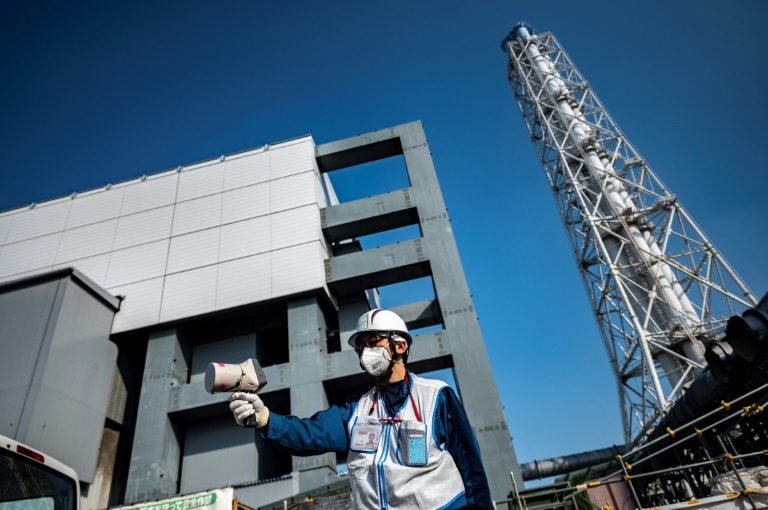
Japan plans to start releasing more than a million tonnes of treated water from the crippled Fukushima nuclear power plant into the ocean this year, a top government spokesman said Friday.
The plan has been endorsed by the International Atomic Energy Agency (IAEA), but the government will wait for “a comprehensive report” by the UN watchdog before the release, chief cabinet secretary Hirokazu Matsuno told reporters.
Cooling systems at the plant were overwhelmed when a massive undersea earthquake triggered a tsunami in 2011, causing the worst nuclear accident since Chernobyl.
Decommissioning work is under way and expected to take around four decades.
The site produced 100 cubic metres (3,500 cubic feet) of contaminated water each day on average in the April-November period last year — a combination of groundwater, seawater and rainwater that seeps into the area, and water used for cooling.
The water is filtered to remove various radionuclides and moved to storage tanks, with more than 1.3 million cubic metres on site already and space running out.
“We expect the timing of the release would be sometime during this spring or summer,” after release facilities are completed and tested, and the IAEA’s comprehensive report is released, Matsuno said.
“The government as a whole will make the utmost efforts to ensure safety and take preventive measures against bad rumours.”
The comments are a reference to persistent concerns raised by neighbouring countries and local fishing communities about the release plan.
Fishermen in the region fear reputational damage from the release, after attempting for years to reestablish trust in their products through strict testing.
Plant operator TEPCO says the treated water meets national standards for radionuclide levels, except for one element, tritium, which experts say is only harmful to humans in large doses.
It plans to dilute the water to reduce tritium levels and release it offshore over several decades via a one-kilometre-long (0.6-mile) underwater pipe.
The IAEA has said the release meets international standards and “will not cause any harm to the environment”.
Regional neighbours including China and South Korea, and groups such as Greenpeace, have criticised the plan.
The March 2011 disaster in northeast Japan left around 18,500 people dead or missing, with most killed by the tsunami.
Tens of thousands of residents around the Fukushima plant were ordered to evacuate their homes, or chose to do so.
Around 12 percent of the Fukushima region was once declared unsafe, but now no-go zones cover around two percent, although populations in many towns remain far lower than before.
AFP