President Denis Sassou Nguesso, 82, who has ruled this central African nation for more than four decades, is widely expected to extend his grip on power for another five-year term. His Congolese Labour Party (PCT) controls the judiciary, the national electoral commission, and virtually every lever of state. But the emergence of Melaine Deston Gavet Elengo, a 35-year-old oil sector engineer running on a platform of transparency and institutional reform, has injected a rare note of uncertainty into a political landscape long defined by stagnation.
The Republic of Congo, which should not be confused with the neighboring Democratic Republic of Congo, is Africa’s third-largest oil exporter, pumping between 236,000 and 252,000 barrels per day. Yet roughly half its 6 million citizens live below the poverty line. Freedom House rates the country just 17 out of 100 on its global freedom index, placing it among the most politically repressive nations on earth. The United Nations Human Development Index ranks Congo 171st out of 193 countries.
The Contenders: Who Is on the Ballot?
Seven candidates have qualified to appear on Sunday’s ballot. The field ranges from a first-time student of institutional reform to a four-time veteran candidate who has never cracked a single percentage point. Here is a closer look at the major figures:
First elected in 1979 under a one-party state. Reclaimed power through a civil war in 1997. Africa’s third-longest-serving ruler. His PCT controls the judiciary and electoral commission.
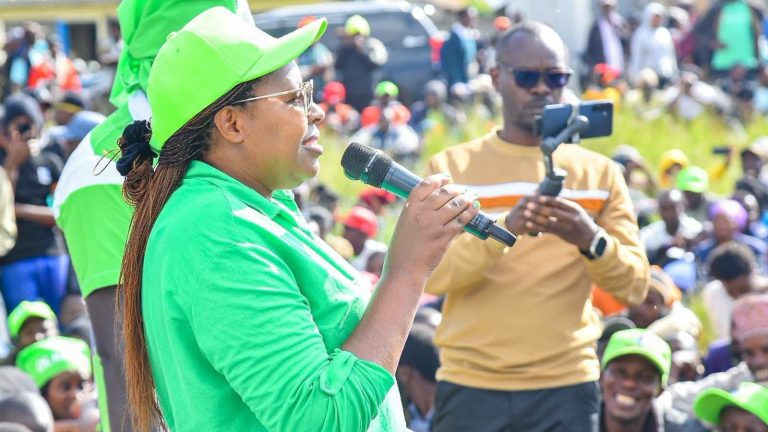
Oil sector engineer and youngest contender. Campaigns on transparency, judicial independence, and inclusive development. Seen as the most credible challenger in years.
Veteran lawmaker from Lekoumou. Won just 0.62% in 2021. Pledges economic diversification away from oil dependency and poverty reduction.
Economist making his second presidential bid after winning 0.52% in 2021. Focuses on governance reform, job creation, and reducing inequality.
University lecturer running for the first time. Campaigns on institutional reform, public finance improvement, and national unity.
Retired customs inspector and former lawmaker. Promises to tackle corruption and secure the release of jailed opposition figures. First presidential bid.
Anguios Nganguia Engambe, president of the Party for Action of the Republic, is making his fourth run. In 2021 he received just 0.18 percent of the vote. He has pledged to bridge political divides and boost civic participation.
Notably absent from the ballot are leaders of the main opposition Pan-African Union for Social Democracy (UPADS), which is boycotting the election — as it did in 2021 — citing integrity concerns. UPADS has nonetheless urged its base to vote according to individual conscience, a stance that analysts believe could funnel dissident votes toward Elengo.
“He could secure at least 20 percent of the vote, signalling a generational shift. His unique advantage lies in the unspoken support from UPADS dissidents frustrated with the boycott.”
— Andrea Ngombet, Exiled Founder, Sassoufit advocacy group
Four Decades of Sassou Nguesso: Power, Patronage, and Prosecution
Denis Sassou Nguesso’s political biography is, in many ways, the biography of the modern Congolese state. He first took office in 1979 and governed under a one-party system for 12 years before being unseated when opposition lawmakers introduced multiparty elections. He returned to power in 1997 not through a ballot but through armed conflict, defeating then-President Pascal Lissouba in a brutal civil war. He has not relinquished power since.
In 2015, Nguesso pushed through a controversial constitutional referendum that reset presidential term limits from two to three and stripped the charter of any age restriction, enabling him to seek a fifth consecutive term in 2021. That maneuver drew widespread condemnation from civil society organizations and international observers but faced no legal challenge domestically — a reflection of his stranglehold on the judiciary.
His grip on power has been reinforced by a web of strategic foreign alliances, according to analysts. Close ties with Beijing have brought Chinese infrastructure investment. Relationships cultivated in Moscow have offered diplomatic cover in multilateral forums. Paris, long the dominant outside power in Francophone Africa, has historically shielded his government — though that relationship has grown more complicated.
Since 2013, French authorities have pursued what are known as “ill-gotten gains” investigations into assets held by African leaders and their families on French soil. In 2022, French courts seized property belonging to Nguesso’s son, Denis-Christel Sassou Nguesso, who serves as Congo’s minister of international cooperation and is widely regarded as his father’s preferred successor.
The Real Stakes: Oil Wealth, Forest Loss, and a Post-Nguesso Succession
Whatever the official outcome Sunday, three structural crises will define the next administration’s agenda — and the lives of ordinary Congolese.
Oil dependency and poverty. Congo earns more than 80 percent of its export revenue from petroleum, according to World Bank data, making it acutely vulnerable to commodity price shocks. Authorities have doubled down on hydrocarbons in recent years — in 2015 they set an ambitious target of 500,000 barrels per day within three years, and liquefied natural gas exports began in 2024 — but that investment has not translated into broad prosperity. Unemployment hovers near 40 percent, electricity access remains unreliable even in Brazzaville and Pointe-Noire, and rural communities are almost entirely cut off from economic opportunity.
Agriculture and deforestation. Before oil was discovered in the 1970s, timber and agricultural produce were the pillars of Congo’s economy. Today, despite possessing up to 10 million hectares of arable land, only a fraction is under cultivation — and most of that supports low-yield subsistence farming. The government has outlined plans to expand cassava, maize, sorghum, and soy production and to develop fisheries and poultry sectors, but implementation has been slow. Meanwhile, deforestation in the Congo Basin — the world’s second-largest tropical rainforest network, after the Amazon — nearly doubled between 2010 and 2020 compared to the prior decade, threatening the biodiversity of a region that includes the UNESCO World Heritage-listed Nouabale-Ndoki National Park, home to lowland gorillas, chimpanzees, and forest elephants.
Political succession. Many Congolese concede that Nguesso will win Sunday. Attention has therefore shifted to what comes after. A succession struggle is already taking shape behind closed doors, analysts say. Denis-Christel Sassou Nguesso, the president’s son and minister of international cooperation, is the presumed front-runner. But he faces challenges from his cousin Jean-Jacques Bouya, the minister of planning and public works, and from Jean-Dominique Okemba, the president’s nephew and director of national security. The outcome of that internal jostling may prove more consequential for Congo’s future than Sunday’s official vote tally.
Several prominent opposition voices will be absent from this contest entirely — not by choice, but by imprisonment. Jean-Marie Michel Mokoko, 78, a former army chief and one-time Nguesso adviser who turned against the president and ran against him in 2016, was arrested after that election and sentenced to 20 years in prison on charges of undermining state security. André Okombi Salissa, a former minister who also defected to the opposition in 2016, received a 20-year sentence of hard labor in 2019. The Africa Center for Strategic Studies notes that protests are rarely permitted and are met with state violence when they do occur.
Polls open at 6 a.m. (0500 GMT) Sunday and close at 6 p.m. A candidate must win an absolute majority to avoid a runoff. Results are expected within days, though the outcome, analysts say, is unlikely to surprise.
What may surprise, however, is the margin — and what it signals about the patience of a young, restless population that is watching closely, even if the system leaves it little room to act.
AGENCIES