The United States Trade and Development Agency (USTDA) is set to host a senior Kenyan delegation in the coming weeks as part of a renewed effort to deepen cooperation between the two countries on port and infrastructure development.
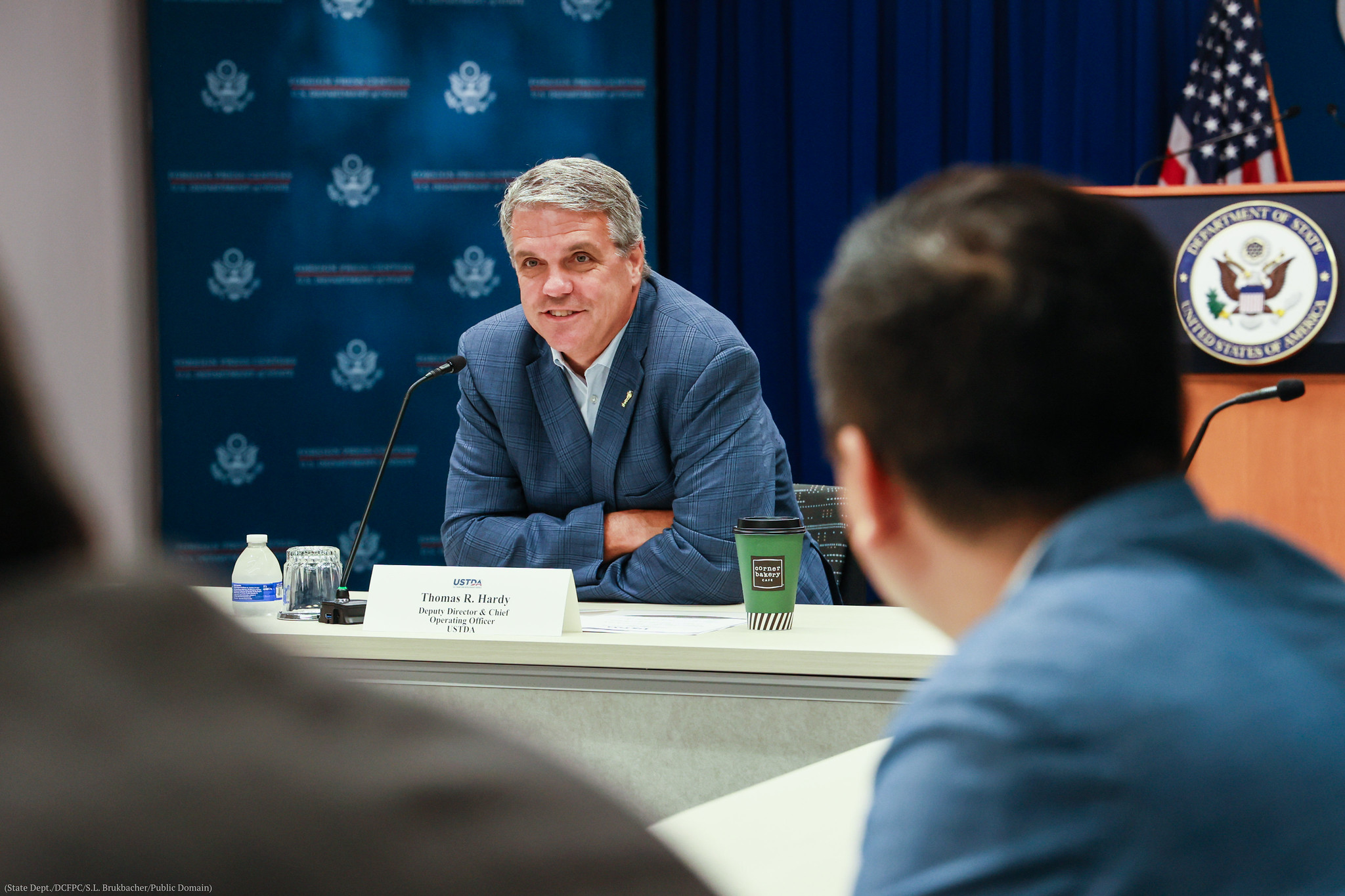
USTDA acting Director Thomas told a media roundtable, in Washington DC, that the visit reflects the agency’s sharpened ‘America First’ approach to global infrastructure engagement, which prioritizes US strategic interests while supporting partner countries’ economic growth.
Hardy said the visit, whose details are still being worked on, will expose Kenyan officials and the business community to American port‑infrastructure solutions and financing models.
“We’re bringing a delegation from Kenya to the United States to introduce them to port infrastructure solutions, financing options to upgrade their port infrastructure,” he said, noting that Kenya remains the gateway for East Africa’s trade.
He emphasized that the US intends to ensure American companies and financing institutions are positioned to compete in Kenya’s expanding infrastructure market, which has been dominated by China for more than a decade.
“We want to make sure that US companies, with US financing, is there to help our Kenyan partners build out that infrastructure for greater trade between East Africa and the rest of the world.”
Kenya is “a safe bet”
On Kenya’s recently-enacted National Infrastructure Fund, which expands the framework for private investment in infrastructure, Hardy observed how the legislation aligns with USTDA’s model of mobilizing private capital rather than relying solely on government financing.
“What it does do is it prioritizes increased private sector investment, and I think that’s where the US Trade and Development Agency historically excels.
“So I think as I look at Kenya, the driver for USTDA will be continued investment supporting the Kenyan private sector.”
Hardy noted that Kenya is viewed as a “safe bet,” creating fertile ground for US commercial engagement.
“For USTDA, the role we have is to invest in good projects that can bring more financing into the Kenyan market, but do it in a way that supports more US company engagement.
“There’s greater stability, but I think with that stability needs to be local stability in the Kenyan market. And I think what we see is positive signs from both the private sector and the financial markets that they see Kenya as a good market.”
Hardy emphasized that USTDA’s work under President Donald Trump is focused on investments that incorporate national security considerations alongside economic goals, , actively promotes American technologies and commercial solutions in markets where China and Russia have gained influence.
“Our purpose is clear. Support economic development in our partner countries, but also do it in a way that advances US interests.
“We are not shy to make that point. We are very America First, pushing out China and Russian technologies in favor of US solutions.”
Attracting private financing
Hardy said Kenya’s infrastructure landscape presents significant opportunities for US engagement, citing previous investments like Mawingu Networks, which expanded digital access. Future engagements will focus on commercially viable projects capable of attracting private financing.
“Our role is to invest in good projects that can bring more financing into the Kenyan market, but do it in a way that supports more US company engagement.”
Meanwhile, Hardy also highlighted USTDA’s expanding footprint in other regions, including in Southeast Asia. The agency is supporting Vietnam’s exploration of small modular nuclear reactors (SMRs), investing in cybersecurity and digital infrastructure.
USTDA is also preparing feasibility studies for new data centers and critical minerals processing facilities in the country.
In Türkiye, the agency is prioritizing digital infrastructure, cybersecurity, and nuclear energy development, with further interest in SMRs as part of its long‑term power strategy.
In Latin America, the USTDA is rebuilding after years of limited activity, with recent engagements in Honduras and upcoming opportunities in Colombia, El Salvador, and Ecuador.
Hardy further pointed to USTDA’s support for the Medusa subsea cable system linking West Africa to Europe, which he described as a model for strengthening digital connectivity across regions.