The United States has initiated an aggressive diplomatic campaign aimed at dismantling what it calls the International Criminal Court’s (ICC) “threat to American sovereignty.”
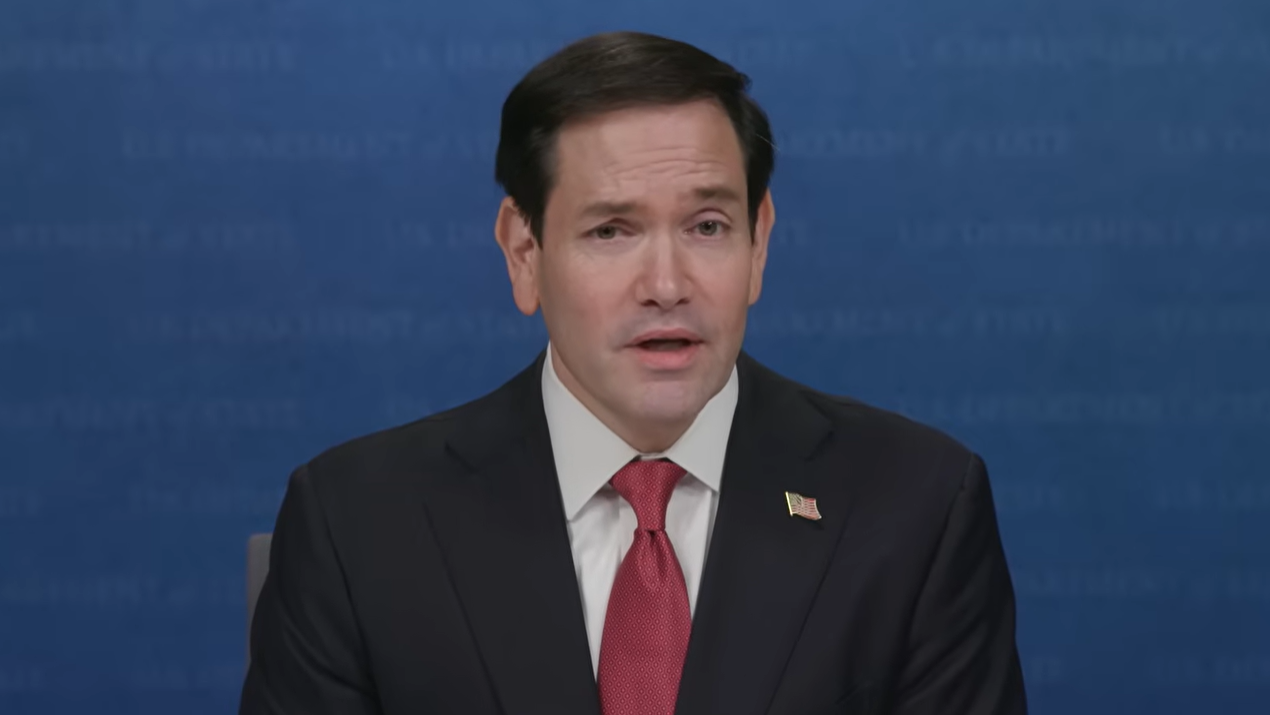
Secretary of State Marco Rubio announced the whole-of-government response initiative to systematically disable the ICC’s ability to operate, target American servicemen or officials, or otherwise threaten American sovereignty. This sets off a significant escalation in Washington’s long‑standing opposition to the ICC and signals a coordinated effort to pressure ICC member states to withdraw from the Rome Statute.
The campaign will feature a whole-of-government response to systematically disable the ICC’s ability to operate, target American servicemen or officials, or otherwise threaten American sovereignty.
“The ICC poses an intolerable threat to U.S. sovereignty – it claims the authority to prosecute and even imprison American servicemen and officials operating on behalf of America’s national interest,” said a statement from the State Department.
“Americans never signed up for this, and all American presidents since the ICC’s ratification have maintained that the ICC does not have jurisdiction over Americans.”
This is a reaction to previous attempts by the ICC to indict “US servicemen and intelligence officers and has since refused to close these cases”.
Globalist bureaucracy
“The ICC now seeks to become the unaccountable global arbiter – positioning itself above and beyond the nation state as a supranational enforcement arm of a globalist bureaucracy empowered to persecute American servicemen and officials at will.
“No diplomatic option will be off-limits in the campaign to dismantle the threat posed by the ICC to Americans.”
According to Rubio, the offensive will feature a wide range of actions intended to ensure that Hague-based ICC is incapable of “threatening US sovereignty or targeting Americans”.
The specific actions range from high‑level diplomatic calls, pressure on partner nations, visa restrictions, and potential sanctions targeting ICC personnel and affiliated organizations.
The US argues that the ICC has positioned itself “above and beyond the nation state as a supranational enforcement arm of a globalist bureaucracy empowered to persecute American servicemen and officials at will.”
Washington maintains that the ICC has no jurisdiction over Americans and cites past investigations involving US servicemen and intelligence officers as evidence of what it calls ICC overreach.
Under the fresh campaign, nations benefiting from US military cooperation or security partnerships will be urged to reject the ICC’s “purported authority” in addition to plans to encourage non‑Rome Statute nations to leverage their diplomatic networks to take similar actions.
“Nations that partner with American law enforcement and the US military or that enjoy the benefits of the U.S. security umbrella are called upon to reject the ICC’s purported authority to prosecute American officials and servicemen,” the statement said.
This is expected to draw criticism from proponents of international law and global judicial cooperation will view the campaign as an attempt to weaken international criminal accountability mechanisms and undermine the Rome Statute system.
ICC intervention
As the United States intensifies its diplomatic pressure, the campaign is poised to reshape global debates around sovereignty, international justice, and the future of multilateral judicial institutions.
The ICC was established through the adoption of the Rome Statute in 1998 at a United Nations diplomatic conference in Rome, but it did not come into force until 2002, with its seat in the Dutch city of The Hague.
The court became the world’s first permanent judicial body mandated to prosecute individuals responsible for genocide, crimes against humanity, war crimes, and the crime of aggression. Its jurisdiction is complementary to national courts, meaning the ICC only intervenes when states are unwilling or unable to prosecute gracious international crimes.
The Court’s authority extends to crimes committed on the territory of States Parties, by nationals of States Parties, or in situations referred by the UN Security Council.
More than 120 countries are signatories to the Rome Statute across Europe, Latin America, and Africa, while major powers such as the United States, China, Russia, and India remain outside the treaty framework.
The ICC’s mandate is anchored in strengthening global accountability and ending impunity for perpetrators of mass atrocities.
Its supporters view it as the cornerstone of modern international criminal justice and a centerpiece of global efforts to address mass atrocities and uphold international legal norms.
The USA has long rejected the ICC’s jurisdiction over American nationals, arguing that the Rome Statute was never ratified by Washington and therefore cannot bind US officials or servicemen. This position has hardened over the years and this latest move escalates that confrontation between Washington and the court.