

Pressure is mounting on the government to urgently review the Competency-Based Education (CBE) system as education stakeholders, researchers and religious leaders raise alarm over what they describe as deep structural and implementation failures affecting learners across the country.
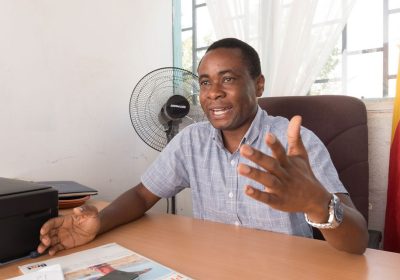
The growing backlash comes amid fresh criticism from educationist Davies Okombo, who warned that weak governance and poor coordination in the education sector could derail reforms if urgent oversight measures are not put in place.
Speaking during an interview on Radio Generation on Wednesday, 8 May 2026, Okombo argued that education reforms can only succeed if the government strengthens accountability structures and ensures resources allocated to schools are properly managed.
“It is very, very important. If we have these funds consolidated, we need a stronger governance structure so that this money is not lost to outright theft and goes to schools and so forth,” Okombo said.

He added that proper oversight in the education sector would accelerate Kenya’s development ambitions and improve the implementation of the new curriculum framework.
“So if we have proper oversight and governance, I believe Kenya will reach Singapore sooner than we think,” he stated.
His remarks come at a time when concerns over the implementation of CBE continue to intensify, particularly at the Early Childhood Development Education (ECDE) level, where experts say inadequate planning between the Ministry of Education and county governments has severely affected delivery.
Analysts now argue that the transition from the 8-4-4 system to the competency-based model underestimated the complexity of teacher preparedness, learning infrastructure and financing required to sustain the reforms.
Studies conducted in rural pre-primary schools in Embu County several years after the rollout of the curriculum revealed that low teacher competency remained one of the biggest obstacles to effective implementation of CBE.
Researchers found that many ECDE teachers lacked adequate understanding of competency-based assessments, experiential learning approaches and curriculum design. Similar concerns had previously been flagged by the Kenya Institute of Curriculum Development (KICD).
Education stakeholders say that while many teachers welcomed the shift toward learner-centred education, the majority lacked sufficient exposure to practical child-centred teaching strategies, making classroom implementation difficult.
The latest public opinion data now shows growing dissatisfaction among Kenyans regarding how the system is being implemented and assessed.
According to an Infotrak national survey conducted between December 2025 and January 2026 across all 47 counties, 45 per cent of Kenyans expressed dissatisfaction with the CBC grading framework, compared to 38 per cent who supported the system.
Another 17 per cent of respondents said they were undecided on the grading model that replaced the traditional letter-grade system.
The survey, which interviewed 1,000 adults nationwide, exposed sharp regional disparities in public confidence toward the curriculum.
North Eastern Kenya registered the highest dissatisfaction levels at 80 per cent, followed by the Coast region at 55 per cent and the Eastern region at 50 per cent.
Nairobi and Nyanza regions also recorded notable concern, with nearly half of the respondents expressing reservations over the assessment framework.
The findings further indicated that dissatisfaction cuts across gender lines, suggesting the concerns are widespread nationally.
Ogamba defends CBE
However, resistance appeared higher among respondents aged 46 years and above, many of whom are parents with children currently transitioning through the new education system.
Education Cabinet Secretary Julius Ogamba has repeatedly defended the competency-based model, arguing that the grading system is designed to identify learner strengths and competencies from Grade 10 onward rather than relying purely on memorisation.
Ogamba acknowledged challenges during the Grade 9 to Grade 10 transition but maintained that the system was intended to promote practical skills, creativity and innovation among learners.

President William Ruto has also dismissed criticism surrounding Grade 10 placements, insisting the transition process remains merit-based despite complaints from parents whose children reportedly failed to secure placements in schools of their choice.
The dissatisfaction reflected in the Infotrak survey also mirrors wider frustrations over the cost of implementing the curriculum.
At least 39 per cent of respondents cited high education costs as one of the biggest burdens associated with CBC, while 19 per cent complained about inadequate public awareness and guidance on how the system operates.
Parents have increasingly raised concerns over textbook shortages, infrastructure gaps, additional learning requirements and unclear pathways for learners transitioning into senior secondary school.
Overhaul the model?
The Kenya Conference of Catholic Bishops (KCCB) has since joined calls for an urgent review of the system, warning that poor implementation risks turning learners into “subjects of experimentation.”
Speaking on 16 April, Nairobi Archbishop Philip Anyolo criticised the government for rolling out the curriculum before adequately preparing schools and stakeholders.
“We cannot place our children in a constant mode of experimentation. The government has all the technical expertise it needs locally and internationally to have streamlined the implementation of CBE long before rolling it out,” said Anyolo.
The bishops called on the Ministry of Education to establish a multisectoral team of experts to evaluate and redesign the system to address persistent implementation challenges.

According to the clergy, although CBE was introduced to promote critical thinking, creativity and practical competencies, the rollout exposed serious weaknesses in planning, financing and infrastructure support.
“As we have come to know it, CBE requires more teachers, equipment and financing,” the bishops stated.
Their concerns come amid continued complaints from schools over shortages of teachers, laboratories and learning materials as Grade 10 learners continue adjusting to the new curriculum structure.
Education analysts now warn that unless the government urgently addresses governance gaps, teacher preparedness and funding challenges, the ambitious reforms risk widening inequalities in the education sector instead of transforming learning outcomes.