

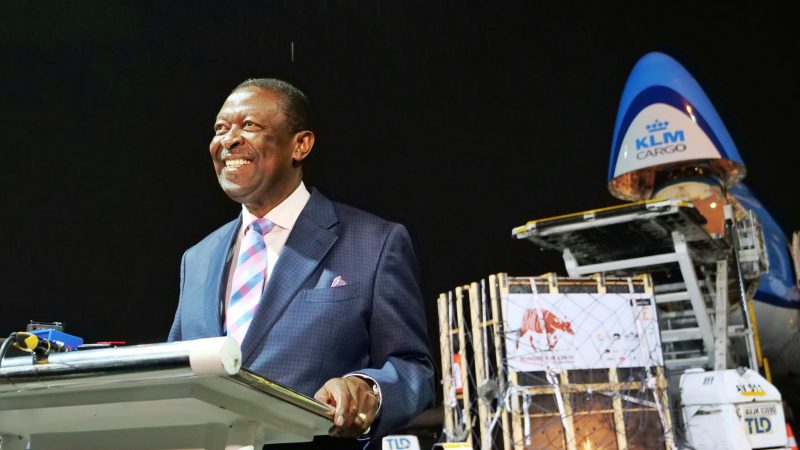
Prime Cabinet Secretary and CS for Foreign Affairs Musalia Mudavadi has described the repatriation of the critically endangered Mountain Bongo as a defining moment in Kenya’s conservation journey, underscoring the country’s commitment to protecting its natural heritage.
Speaking at Jomo Kenyatta International Airport during the arrival of the rare antelopes from the Czech Republic, Mudavadi said the return reflects an important milestone. Fewer than 100 Mountain Bongos remain in the wild, placing the species among the most threatened large mammals in Africa.
Mudavadi noted that the Mountain Bongo once thrived in Kenya’s forests, namely Aberdares, Mount Kenya, Mau, and Eburu ecosystems. However, habitat loss, poaching, and environmental pressures have pushed the species to near extinction.
Conservation milestone
The Kenya Wildlife Service is undertaking several restoration programs aimed at reintroducing captive-bred Bongos into protected habitats as part of a broader national strategy to rebuild wildlife populations and restore ecological balance.
According to Mudavadi, Kenya’s conservation success is grounded in strong legal and policy frameworks, particularly the Wildlife Conservation and Management Act (2013), which provides a foundation for species protection, habitat restoration, and biodiversity management.
He said the Mountain Bongo Recovery Programme aligns with Kenya’s biodiversity strategies, climate commitments, and the United Nations Sustainable Development Goals.
The repatriation effort involved collaboration between government agencies, conservation groups, and international partners, including Mount Kenya Wildlife Conservancy, which has played a central role in breeding and habitat preparation.