
The Independent Electoral and Boundaries Commission is seeking KSh502 million to expand diaspora voter registration and participation ahead of the 2027 General Election, warning that financial constraints and legal barriers continue to lock out millions of Kenyans living abroad.
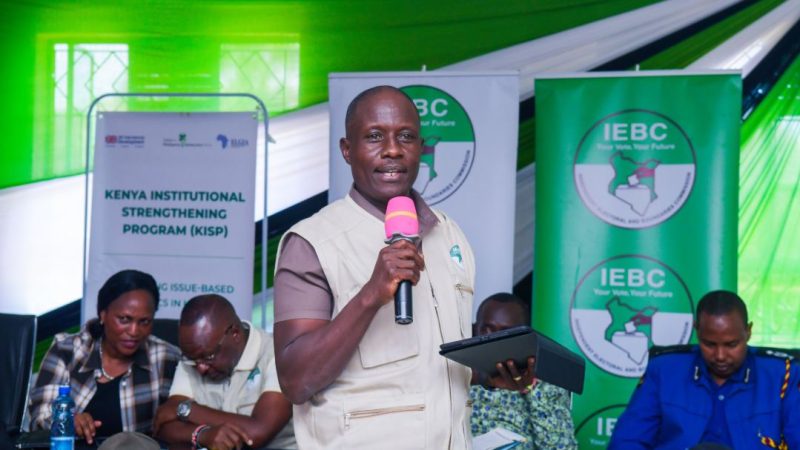
Appearing before the National Assembly Diaspora Affairs and Migrant Workers Committee, acting chief executive officer Moses Sunkuli said the commission faces a widening gap between the estimated diaspora population and registered voters.
More than 1.4 million Kenyans are believed to reside outside the country, yet only 10,443 registered to vote in the 2022 General Election. Of those, turnout stood at 57.76%.
Sunkuli said the commission roadmap to 2027 is built on institutional coordination, legal alignment and operational readiness, but remains constrained by limited funding.
Out of the KSh502 million required to support diaspora registration and voting activities, only KSh400 million has been allocated in the current budget cycle.
“The Commission is unable to carry out any diaspora mapping and registration activities due to unavailability of funding in the current financial year,” Sunkuli said.
He added that discussions are ongoing with the National Assembly Justice and Legal Affairs Committee to secure additional resources. If funding is approved, mapping and registration could begin as early as July.
Legal and logistical barriers slow diaspora voting expansion
Access remains a major hurdle. During the 2022 elections, diaspora voting was limited to 12 countries due to legal restrictions.
Regulation 34 of the Elections Registration of Voters Regulations ties voter registration and voting to the presence of Kenyan embassies or consulates, effectively excluding eligible voters in countries without diplomatic missions.
The commission has warned that the regulation imposes limitations on the constitutional right to vote and has called for amendments to allow a more flexible approach to diaspora participation.
Low awareness among diaspora communities has also contributed to modest registration and turnout despite efforts such as adjusted voting hours.
Lawmakers raised concerns over accessibility in countries such as Saudi Arabia, where some Kenyan migrant workers reportedly do not have control over their passports.
“This committee should come in and clamp down on the issue of passports being in the possession of employers,” said Sigowet Soin MP Justice Kemei.
Kisauni MP Rashid Bedzimba sought clarification on whether national identity cards could be used by voters without passports.
IEBC director of legal services Chrispine Owiye said the use of IDs outside the East African region had been challenged in court, with the High Court ruling against their use in the 2022 elections.
Committee members also urged the commission to address operational inefficiencies, including long queues witnessed in previous elections, and to increase the number of polling stations.
Ruiru MP Simon King’ara called for enhanced voter education and improved infrastructure to ease congestion and boost participation.
In its submission, the commission emphasized the need for legislative reforms, timely funding, stronger inter-agency coordination and sustained voter education.
Sunkuli warned that without these measures, efforts to expand diaspora voting will remain limited despite constitutional provisions requiring progressive realization of the right to vote.