A team of researchers at the East China Normal University in Shanghai have set a global pace by making use of sunlight and seawater to recycle plastic.
The process uses sunlight to break down the plastics at room temperature, and ambient pressure using a catalyst called uranyl cation, a type of nonradioactive uranium that is abundant in seawater and can be easily extracted.
Although scientists over the years have proved that sunlight and seawater can be used to recycle plastic, there has not been any major follow-up by Governments throughout the world to initiate that process.
According to the researchers, the process is low-cost, environmentally friendly and economically viable.
“The entire process is not only environmentally friendly but also energy-saving and highly efficient. Previously, the natural decomposition of these plastics would take decades or even centuries but with this method, we can decompose them within a day or two while obtaining commercial chemicals and monomers (molecules that can form polymers) such as benzoic acid and terephthalic acid, which are high-value fine chemicals,” said lead researcher Jiang Xuefeng, a professor at the School of Chemistry and Molecular Engineering at ECNU.
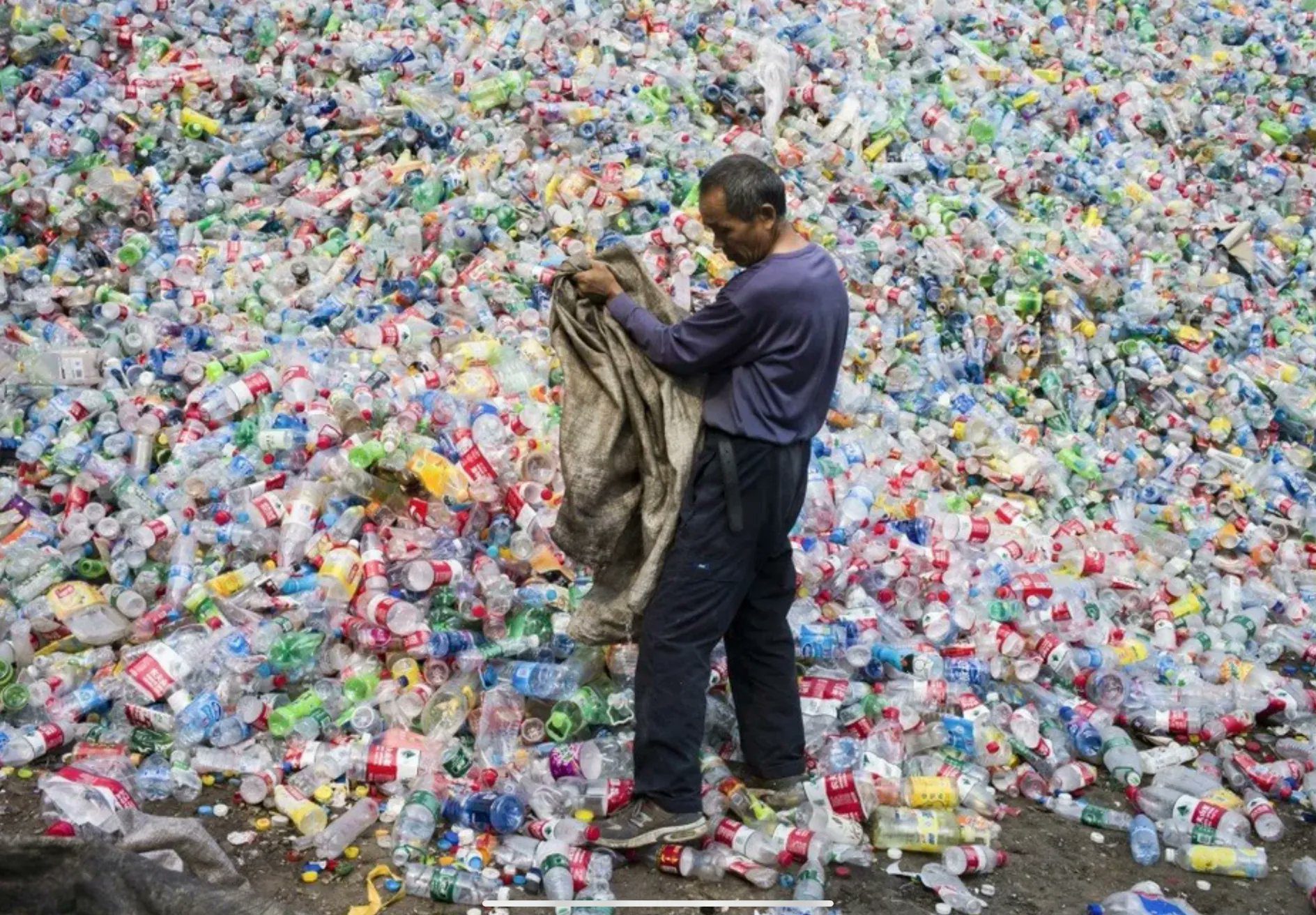
In addition, Jian said the process facilitates the efficient conversion of plastic bottles to commercial chemicals noting that it does not require cleaning bottles.
“Having water inside is not a problem. Labels do not need to be removed, and the presence of pigments or adhesives does not affect the process. We have also achieved the degradation of mixed plastics. We aim to turn plastic waste in landfills into valuable, reusable high-purity raw materials,” added Jiang.
The research team has so far successfully degraded nine common types of plastic into raw materials, which can be used to produce improved plastics and new ones.