
A total of 170 match officials, including six women, will preside over the 104 matches at the 2026 FIFA World Cup in the Summer. The list consists of 52 referees, 88 assistant referees and 30 video assistant referees from 50 countries.
FIFA said the selection process was “meticulous and comprehensive […] spanning over three years”.
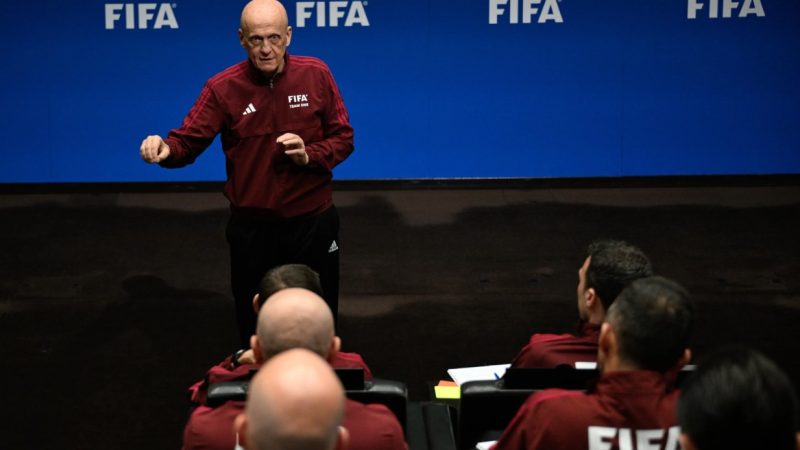
“The selected match officials are the very best in the world,” said Chief Refereeing Officer Pierluigi Collina, also the chairman of the Referees Committee.
“Their performances in domestic and international matches were regularly assessed. The selected officials have received, and will continue to receive, comprehensive support from our fitness coaches and medical staff, including physiotherapists and a mental specialist.
“Our goal is to ensure that they are in optimal physical and mental condition when they arrive in Miami on 31 May.”
Collina explained that consideration was given to the consistency of the performances delivered by candidates at FIFA tournaments, as well as in international and domestic competitions in recent years.
“This year’s FIFA World Cup will be the biggest in history, with a 48-team line-up and 104 matches to be contested across the most extensive geographical footprint in the tournament’s history.
“It will be the largest FIFA Team One ever, with 41 more match officials than at Qatar 2022. Each of them must be ready to be appointed for a match and to contribute actively to ensuring that the refereeing at the World Cup is a success.
“The fact that six women match officials have been selected continues a trend that was started four years ago in Qatar as we aim to further develop women’s refereeing.
“As has been the case at FIFA tournaments in the past, our match analysts will provide the match officials with all the information they need to prepare properly for their games.
“As at previous World Cups, technology will play an important role in supporting match officials in their decision-making.
“Goal-line technology, an advanced version of semi-automated offside technology and connected ball technology will be used, while for the first time in World Cup history, fans will be able to see things from the referee’s on-field perspective thanks to the use of new technologies.”
Refereeing Director Massimo Busacca said the selection process started immediately after the conclusion of the last World Cup in Qatar 2022, “with a structured programme involving seminars, workshops and continuous monitoring”.
“Throughout this period, all candidates were closely evaluated by FIFA instructors, fitness coaches, doctors and physiotherapists, receiving comprehensive support to ensure that they achieve the highest possible standards at the tournament,” explained Busacca.
The officials will attend a 10-day preparation seminar starting on 31 May. The group will then split into two – video match officials shifting base to the International Broadcast Centre in Dallas, Texas, while the referees, assistant referees and support staff will remain in Miami.
Referees will use have body cameras as part of the package to enhance the officiating, including a new VAR protocol.