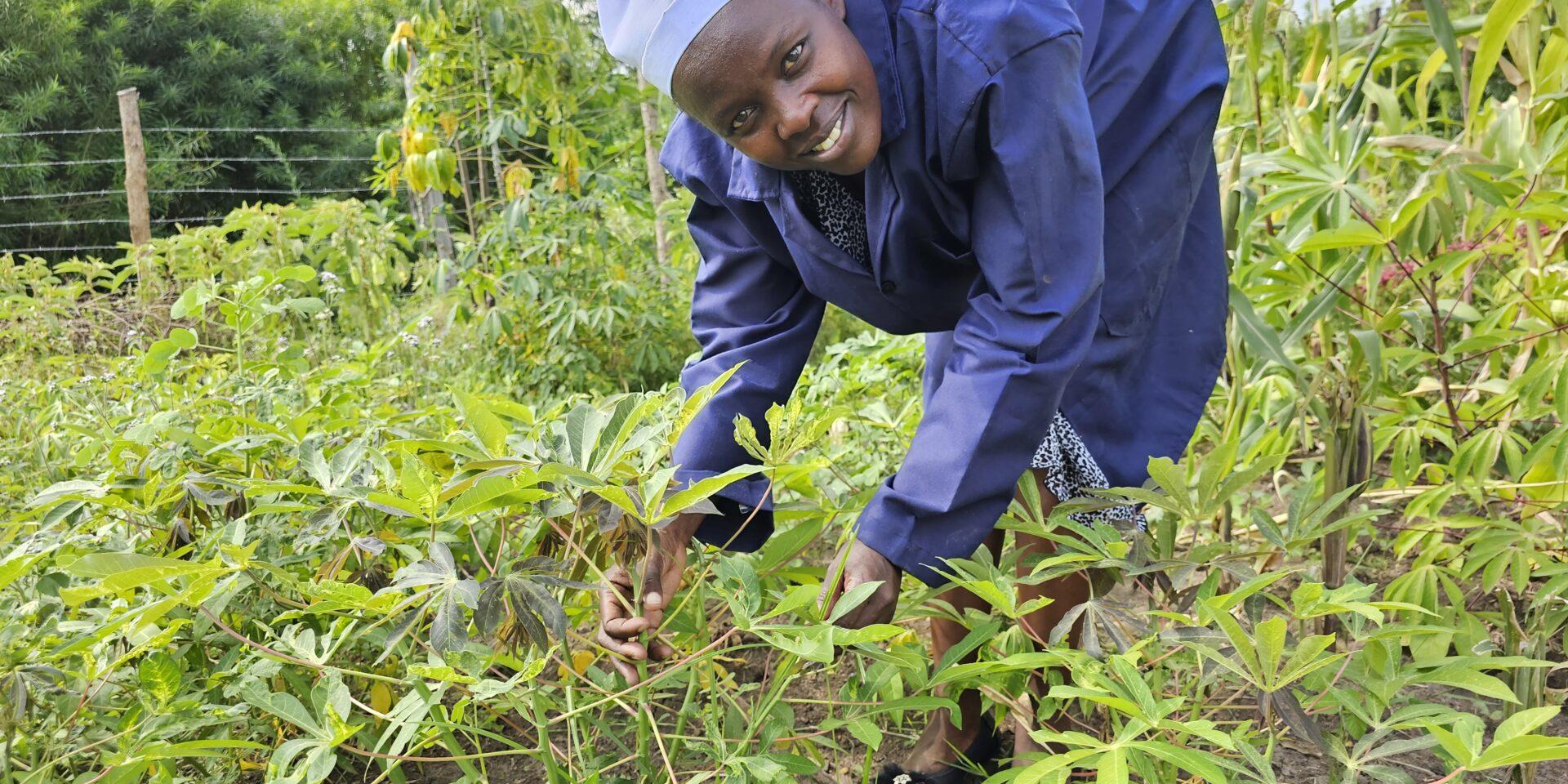
On a half-acre plot in Nyeri County, Mary Wanjiku does something her mother never did. Before she plants her maize, she uses a soil testing service connected to her phone, then reads a message telling her exactly how much nitrogen, phosphorus, and potassium her land contains. She adjusts her fertilizer accordingly. Her yields, she says, have nearly doubled in three seasons.
Wanjiku is not a tech entrepreneur. She is one of millions of smallholder farmers across Kenya who, largely unnoticed by mainstream political discourse, are beginning to practice a stripped-down version of precision agriculture — the kind of data-driven, sensor-guided farming that was once the exclusive domain of large commercial operations in the American Midwest or the Netherlands.
The transformation is not complete. It is not evenly distributed. And it faces formidable structural barriers. But it is real, and its implications for the country’s economy, food security, and rural livelihoods are significant enough to warrant the attention it is not receiving.
- 22.5%: Agriculture’s share of Kenya’s GDP in 2024
- 75%: Of Kenya’s total food output produced by smallholder farmers
- 20–30%: Of Kenyan farmers now using some form of digital agricultural tech
A Sector That Carries the Economy
It is difficult to overstate how central agriculture remains to Kenya’s economic identity. The sector contributed 22.5 percent to Kenya’s GDP in 2024 — making it the single largest industry by output, ahead of transport, real estate, and finance, though the broader services sector as a whole accounts for a larger share of the economy. It employs approximately 40 percent of the total population and up to 70 percent of the rural workforce. It accounts for the majority of the country’s export earnings, from tea and coffee to fresh horticulture bound for European supermarkets.
Yet for decades, the story of Kenyan agriculture has been one of chronic underperformance. Erratic rainfall, poor soil health, limited access to markets, and inadequate extension services have kept millions of smallholder farmers — who produce roughly 75 percent of the food Kenya consumes — trapped in cycles of low productivity. Less than 3 percent of Kenyan farmers have ever conducted a formal soil test, according to data from the GSMA Innovation Fund, despite soil degradation being one of the sector’s most persistent problems.
That picture is changing — slowly, unevenly, but with growing momentum.
Technology Meeting Farmers Where They Are
The tool changing the game is not a tractor or an irrigation system. It is the mobile phone.
Kenya’s high mobile penetration has created an unlikely platform for agricultural modernization. Platforms like iShamba, Digifarm, Mkulima Young, and Taimba now collectively serve hundreds of thousands of farmers with real-time market prices, weather alerts, agronomic advice, and direct connections to buyers. iShamba alone has registered over 500,000 farmers, delivering insights via SMS, voice calls, and digital platforms — critical for a rural audience where smartphone penetration and literacy levels vary widely.
Meanwhile, Nairobi-based startup UjuziKilimo — whose name translates roughly from Swahili as “farming knowledge” — launched SoilPal Pro in December 2025, the world’s first smartphone-connected spectral soil sensor. Using visible and near-infrared spectroscopy combined with AI, it analyses more than 13 soil parameters including nitrogen, phosphorus, potassium, pH, organic carbon, moisture, and salinity, delivering results in seconds directly to a farmer’s smartphone. The company’s earlier SoilPal 1.0, which used IoT sensors and SMS, completed more than 17,600 soil tests in Kenya as of March 2025, according to the GSMA — which funded the programme. UjuziKilimo says the broader SoilPal 1.0 programme empowered over 100,000 farmers and delivered yield gains of up to 30 percent in the first season and 200 percent over three years, before being retired.
“We never needed to test our soil before. But now, with crops struggling to grow and diseases spreading, we’re not seeing the results we used to. Soil testing helps us understand what’s changed and how to fix it.”
— Smallholder farmer, Nyeri County, Kenya (GSMA Innovation Fund report, 2024)
Drone-based precision spraying and aerial imaging are expanding rapidly across the sector. The Kenya Civil Aviation Authority had licensed more than 2,000 drones for agricultural use as of 2024, with demonstrations showing a single drone can spray a hectare of wheat in eight minutes — a fraction of the labor time required manually. According to a 2024 review published by the International Society of Precision Agriculture, approximately 20 percent of agricultural technology companies in Kenya are now focused on drone-based solutions, including crop monitoring, pest mapping, and precision spraying.
The Kenya Institute for Public Policy and Research Analysis (KIPPRA), citing data first established by the GSMA, noted in early 2024 that between 20 and 30 percent of Kenyan farmers adopt some form of digital agricultural technology — a striking figure given that nationwide mobile-based agricultural services were negligible less than a decade ago. Kenya currently offers close to 95 distinct agricultural digital services as of the GSMA’s most recent count, nearly double the number available in comparable markets such as Nigeria.
The Barriers That Could Stall the Revolution
For all its promise, the precision agriculture movement in Kenya faces stubborn structural headwinds that could limit its reach to the farmers who need it most.
Only about 25 percent of rural Kenyans used the internet in 2024, according to data from Kenya’s Communications Authority and National Bureau of Statistics. And while the 60 Decibels Digital Farmer Services Kenya Report 2024 found that 56 percent of Kenyan farmers used at least one digital service during the 2023–24 season, meaningful adoption remains thin: a World Bank analysis of that same data found that only 15 percent of all farmers — roughly one in four digital service users — reported usage that had a genuinely positive impact on their farming. Only 8 percent used digital platforms specifically to sell produce, and just 9 percent for financial services. The high initial cost of technology adoption remains a critical barrier: the World Bank has noted that over 70 percent of Kenyan farmers earn less than $2 a day, making capital-intensive tools inaccessible without targeted subsidies or credit facilities.
Digital literacy is another gap. Even where connectivity exists, many farmers lack the confidence or skills to navigate data-heavy platforms. Agricultural professionals who understand both agronomy and digital tools are in short supply, particularly at the county level where most extension services operate.
The government’s Agricultural Sector Transformation and Growth Strategy 2019–2029 formally acknowledges precision farming as a priority, and the National Agroecology Strategy for Food System Transformation (2024–2033) provides a broad framework for climate-resilient, data-driven agriculture. But framework documents, experts note, are not the same as funded, coordinated implementation. The agriculture sector budget as a share of total national expenditure actually declined from 3.5 percent in FY2024/25 to 3.2 percent in FY2025/26, according to the Institute of Economic Affairs Kenya.
What the data collectively suggests is a revolution in progress — one that is real, organic, and already delivering measurable benefits at the farm level, but that remains fragile and unevenly distributed. Smallholder farmers like Mary Wanjiku in Nyeri are experiencing it firsthand. Whether the broader machinery of policy, financing, and infrastructure catches up before the momentum stalls is the defining agricultural question of this decade.
The conversation in Kenya’s political corridors needs to shift. The revolution is already happening in the soil.