Pan-Africanism has been many things at once — a battle cry, a philosophical framework, a geopolitical aspiration, and, to its skeptics, an enduring utopian fantasy. But in 2026, with intra-African trade surging past $220 billion and a continent-wide free trade agreement reshaping economic patterns, the question is no longer whether African unity is possible. The question is how quickly it can be realized.
The idea that 55 nations sharing a continent could one day move, trade, and govern with a coherent continental voice once seemed like the domain of revolutionaries and dreamers. In the 1960s, Kwame Nkrumah of Ghana and Julius Nyerere of Tanzania both championed Pan-Africanism — but from sharply opposing positions. Nkrumah demanded immediate continental political union; Nyerere led the gradualist bloc that resisted it, insisting that sovereignty must be preserved as integration proceeded step by step. Their rivalry defined the tensions that shaped the OAU from its founding. Today, it is bureaucrats in Addis Ababa, trade ministers in Nairobi, and young digital activists in Lagos who are trying to give it institutional flesh and economic bone.
The transformation is real — but it is incomplete, uneven, and constantly threatened by the same forces that have always resisted it: fragmented governance, military coups, foreign economic interests, and the lingering shadows of colonial borders that were never drawn with African unity in mind.
From Nkrumah’s Vision to the African Union: A Long Walk to Institutional Unity
Pan-Africanism was not born on the African continent. It emerged from the Atlantic world of slavery and colonialism — a product of the diaspora’s refusal to accept fragmentation as destiny. In 1900, Trinidadian lawyer and activist Henry Sylvester Williams organized the first Pan-African Conference in London, laying the intellectual groundwork for what would become the 20th century’s most consequential African political movement. W.E.B. Du Bois carried that conference tradition forward through successive Pan-African Congresses, while Jamaican activist Marcus Garvey developed a parallel — and often rival — mass movement of Black nationalism. Together, and later through the work of Nkrumah and Nyerere, these competing currents turned an idea into a movement, and a movement into institutions.
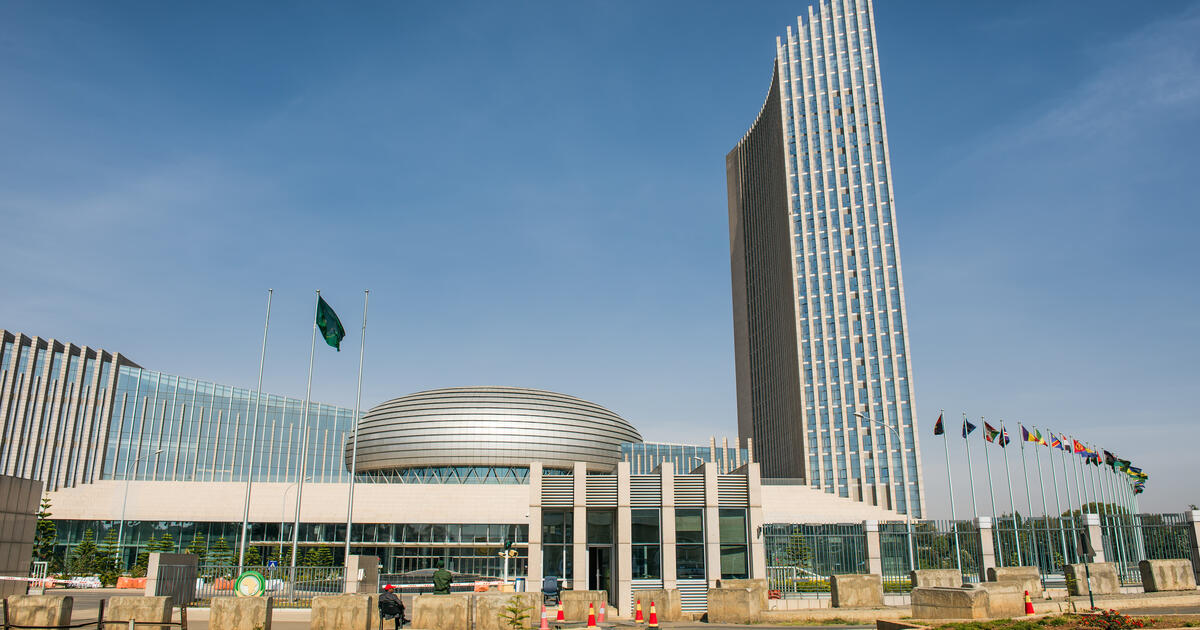
The founding of the Organisation of African Unity (OAU) in May 1963 — when 32 heads of newly independent African states convened in Addis Ababa — was the movement’s most dramatic institutional expression. The OAU coordinated the anti-colonial and anti-apartheid struggle across the continent, providing political cover and solidarity to liberation movements from Angola to Zimbabwe. But it also harbored a deep contradiction. The OAU was run by men who championed African sovereignty on the world stage while crushing it domestically. Its non-interference principle became a shield for dictators, and its unity was largely performative.
The transformation of the OAU into the African Union in July 2002, officially launched in Durban, South Africa, was designed to correct that failure. The AU’s Constitutive Act broke with the non-interference doctrine, asserting the continent’s right to intervene in member states facing war crimes, genocide, and crimes against humanity. New instruments followed: the African Charter on Democracy, Elections and Governance; the African Court of Justice and Human Rights; the African Peace and Security Architecture; and the African Peer Review Mechanism, which invited governments to submit their governance to continental scrutiny. These were not symbolic acts. They represented a genuine political reimagination of what a continental body could demand from its members.
Pan-Africanism’s central purpose was never merely to unite for unity’s sake. It was a response to fragmentation — the deliberate fracturing of Africa by slavery and colonial borders. That fragmentation persists today, in new and more insidious forms.
— Amani Africa Institute, November 2025
Yet the AU has struggled to match its architectural ambitions with enforcement capacity. It remains chronically underfunded, with member states often in arrears on their assessed contributions. Its peacekeeping operations in Somalia, Mali, and Sudan have achieved mixed results. And the wave of military coups that swept West and Central Africa between 2020 and 2024 — in Mali, Burkina Faso, Guinea, Niger, and Gabon — exposed the limits of democratic norms the AU had championed. Kenya’s President William Ruto was appointed in February 2024 as the AU Champion on Institutional Reform, taking over from Rwanda’s Paul Kagame, signaling that the reform agenda remains a live and contested priority.
Economic Integration as the New Engine of Unity
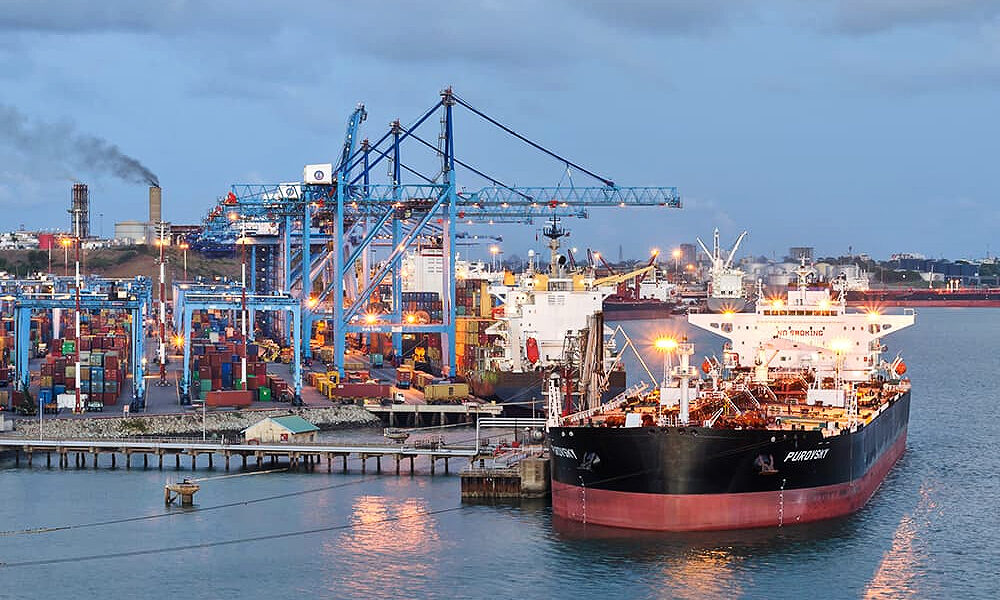
If there is one development that most credibly represents Pan-Africanism’s 21st-century revival, it is the African Continental Free Trade Area (AfCFTA). Officially launched for trading in January 2021, the AfCFTA is arguably the most ambitious economic integration project in the world, covering a market of over 1.3 billion people with a combined GDP of approximately $3.4 trillion. Its core promise: eliminate tariffs on 90 percent of goods traded between African nations over five to ten years, unlock intra-continental services markets, and pull Africa out of its structural dependence on raw material exports destined for Europe, China, and North America.
The early numbers are encouraging. According to Afreximbank’s African Trade Report 2025, Africa’s total merchandise trade grew by 13.9 percent in 2024, reaching $1.5 trillion. Intra-African trade specifically grew 12.4 percent, reaching $220.3 billion — a meaningful jump in a single year and a direct reflection of AfCFTA’s early tariff liberalization gains. As of October 2024, 37 of the agreement’s 54 signatories had submitted tariff schedules and were participating in the Guided Trade Initiative, the practical pilot mechanism enabling real commercial transactions under AfCFTA rules.
The stories behind those statistics are more instructive than the numbers alone. South Africa’s inaugural shipment to Kenya under AfCFTA rules — refrigerators, machinery, and agricultural products — signaled a new era of South-South trade within the continent. Rwanda began trading packaged coffee with Ghana under preferential terms and has since diversified into tea, avocado oil, and honey. Tanzania has exported coffee to Algeria and sisal fiber to Nigeria, moving beyond the raw-commodity trap that has historically kept African producers at the bottom of global value chains. The United Nations Economic Commission for Africa projects a 35 percent increase in intra-African trade by 2045 if AfCFTA is fully implemented.
The Pan-African Payment and Settlement System (PAPSS) — a continental clearing mechanism that allows cross-border transactions in local African currencies — is the financial backbone underpinning this trade revolution. By reducing reliance on the U.S. dollar and the euro as intermediary currencies, PAPSS addresses one of the most overlooked barriers to intra-African commerce: the absurdity of a Ghanaian trader needing to convert cedis into dollars to pay a Nigerian supplier in naira. That structural inefficiency has quietly cost the continent billions in unnecessary foreign exchange losses for decades.
But the honest accounting must include the gaps. Africa’s share of global exports slipped slightly, from 3.5 percent in 2009 to 3.3 percent in 2024, per Afreximbank data. Intra-African trade still accounts for only 14.4 percent of the continent’s total commerce — compared to roughly 62 percent within Europe and approximately 25 percent among ASEAN member states. A trade finance gap estimated at $100 billion annually continues to starve small and medium enterprises of the capital they need to participate in the new continental market. And the benefits have been distributed unevenly: Central African countries lag significantly behind East and Southern African counterparts due to weaker infrastructure and institutional capacity.
The Obstacles That History Keeps Recycling
Pan-Africanism’s greatest challenge in the 21st century is not a lack of vision. The AU’s Agenda 2063 — a 50-year strategic blueprint spanning 2013 to 2063 — lays out a comprehensive roadmap for “an integrated, prosperous and peaceful Africa, driven by its own citizens.” It is a genuine and serious document, touching everything from infrastructure and industrialization to gender equity and democratic governance. The problem is the distance between the blueprint and the ground.
Armed conflict remains the most corrosive threat to continental unity. The ongoing wars in the Democratic Republic of Congo, Sudan, and parts of the Sahel are not peripheral footnotes to the Pan-African story — they are its central contradiction. When tens of thousands die and millions are displaced in the eastern DRC while AU summits produce communiqués, the gap between institutional aspiration and political will becomes impossible to ignore. Conflicts drain resources, destabilize neighbors, create refugee crises, and provide external powers — from Russia’s Africa Corps — the state-controlled successor to the Wagner Group — to Gulf state investors — with opportunities to embed themselves in African political economies in ways that undermine sovereignty rather than reinforce it.
Political instability and the persistence of authoritarian governance compound this challenge. Across parts of West and Central Africa, elected governments have been replaced by military juntas, and some of those juntas have cultivated popular legitimacy by channeling anti-Western sentiment. This political volatility is not simply a governance failure — it reflects deep structural grievances about inequality, youth unemployment, and the perceived failure of liberal democratic institutions to deliver material improvements in ordinary people’s lives. Addressing these grievances is not a distraction from the Pan-African project; it is the project.
The question of language and cultural diversity is often cited as a barrier to integration — and it is real. Africa is home to over 2,000 languages and was divided by colonial powers into French, English, Portuguese, and Arabic-speaking zones that still shape trade patterns, legal systems, and diplomatic alignments today. Unlike the European Union, which built integration on a bedrock of shared legal traditions and geographic proximity, Africa is navigating diversity at an entirely different scale. The Pan-African Parliament, seated in Midrand, South Africa, was designed to give African citizens — not just their governments — a voice in the continental project. But it remains largely consultative, lacking the legislative authority that would make it a genuine engine of democratic integration.
External economic dependency remains perhaps the most structurally entrenched obstacle. Despite the rhetoric of Pan-Africanism, most African economies continue to export primary commodities and import finished goods — a trade relationship that dates to the colonial era and has been perpetuated by international financial institutions, bilateral trade agreements, and the pricing power of global commodity markets. Breaking this pattern requires not just free trade within Africa but strategic industrial policy: investments in manufacturing, digital infrastructure, and the kind of regional value chains that would allow, say, Congolese cobalt to become Cameroonian electric vehicle components rather than Chinese battery inputs.
The 2025 AU theme — the Year of Justice for Africans and People of African Descent through Reparations — signals a political willingness to name these historical wrongs explicitly. Whether that naming translates into the kind of financial transfers or debt relief that could structurally rebalance African economies remains to be seen. But it suggests a continental political culture willing to confront, rather than paper over, the roots of underdevelopment.
The most honest answer to the question this article poses — is African unity closer than we think? — is: yes, and also no. The institutional architecture is real and growing. The economic case for integration has never been stronger or better evidenced. The generation of Africans now entering political and economic life is the most connected, educated, and Pan-Africanist in the continent’s history, shaped by social media solidarities that cross colonial language lines with ease. The AfCFTA, PAPSS, the AU’s reform agenda, and Agenda 2063 represent genuine, serious attempts to build what Nkrumah and Nyerere imagined — a continent that controls its own destiny.
But unity cannot be decreed from Addis Ababa or ratified at summits. It has to be built from below — in trade corridors that work, in borders that don’t extract, in governments that deliver, and in a politics that treats ordinary Africans as the authors of the project rather than its beneficiaries. The dream is alive. The work is harder than the dream.