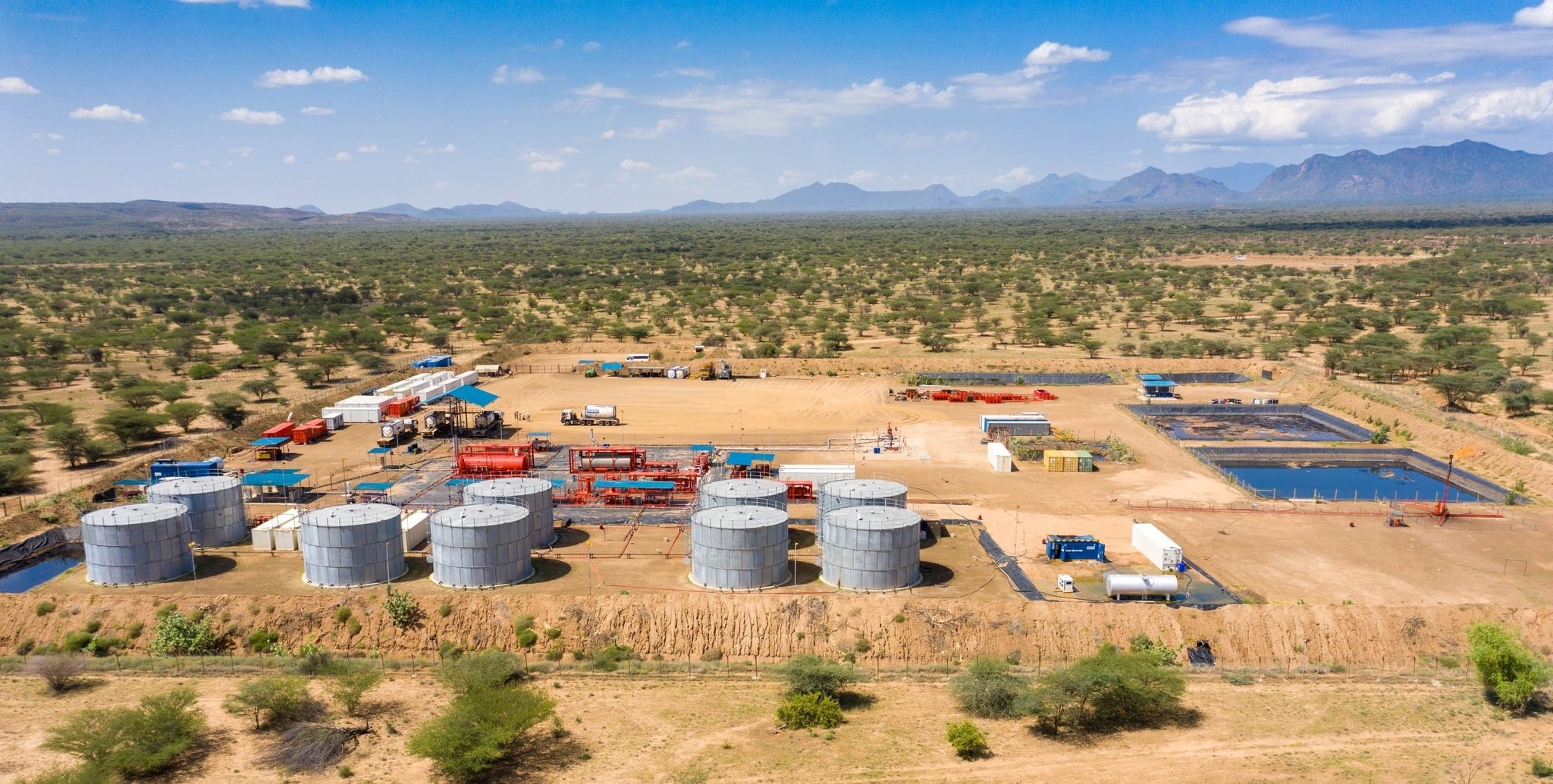
Kenya is turning to rail to finally move its long-stalled Turkana oil to market, choosing a KSh220 billion meter gauge railway extension over a costly pipeline in a pragmatic shift that could accelerate the nation’s debut as an oil exporter.
Parliamentary documents detail plans for 640 kilometres of track from Rongai in Nakuru County to South Lokichar in Turkana. The line is expected to be completed by December 2031, paving the way for full-scale oil evacuation starting January 2032 when production doubles beyond 50,000 barrels per day.
After struggling to secure funding for an 892-kilometre pipeline to Mombasa estimated at USD1.5 billion or KSh193.87 billion, and facing persistent delays, the government is eager to end a 14-year wait. The rail project also replaces earlier pipeline proposals to Lamu costing around KSh193 billion.
Feasibility studies confirmed the meter gauge railway as the most economical choice. Building a standard gauge extension from Rongai would exceed KSh300 billion due to higher engineering costs.
Kenya can leverage its existing 1,082-kilometre meter gauge railway from Mombasa to Malaba via Nairobi, Nakuru, Naivasha and Kisumu. The new section will parallel the Lodwar highway and extend toward Nakodok at the South Sudan border, allowing seamless oil transfer or direct delivery to the port.
Gulf Energy sets production timeline
Gulf Energy will kick off crude production from Block 10BB and Block 13T by December 2026 after acquiring the assets from Tullow Kenya in a USD120 million deal last October. In the initial phase through 2032, the firm will truck oil to Mombasa.
From then on, 155 insulated and steam-heated wagons will haul daily shipments to Kenya Petroleum Refineries Limited tanks at the port. The company aims to load two vessels for export each month once output exceeds 20,000 barrels daily.
The strategy has worried officials of the Lamu Port-South Sudan-Ethiopia Transport corridor since it sidelines the pipeline to Lamu port envisioned in the corridor. Yet the move offers multi-purpose benefits, boosting connectivity and jobs in remote areas.
With Cabinet approval in place and Parliament set to ratify the field development plan within 90 days, Kenya is poised to become the third East African Community oil producer after South Sudan and Uganda. This railway investment signals a smart, efficient path to unlocking Turkana’s oil potential and driving economic growth.