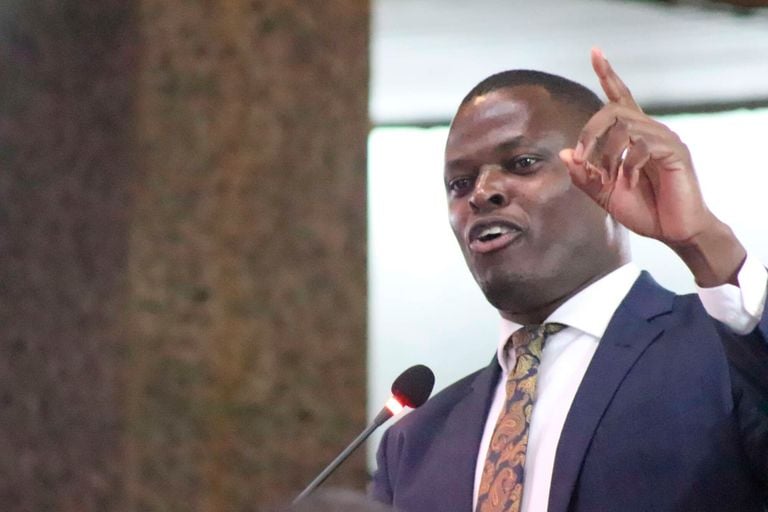
Ndindi Nyoro, a lawmaker, has increased his ownership of Kenya Power by purchasing an extra 5.2 million shares, further solidifying his position as the company’s largest individual stakeholder.
According to regulatory documents, Mr. Nyoro increased his interest in the company from 27.29 million shares at the end of June 2022 to 32.5 million shares at the end of June 2023, or roughly 1.67% of the utility.
His present stake in the failing utility is about Ksh48.75 million, and the additional purchases made in the fiscal year that ended in June were around Ksh7.92 million in value.
Kenya Power shares closed trading on the Nairobi Securities Exchange (NSE) on Thursday at Ksh1.52 compared to Ksh1.45 per unit in August 2022, a modest 4.83% increase over the previous year.
The National Assembly’s Budget and Appropriations Committee’s chair, Mr. Nyoro, stated that he began his investment career in the equity market as a first-year student at Kenyatta University last September.
Among the companies that analysts believe are undervalued on the NSE is Kenya Power, which is battling a weakening shilling that has eaten into its earnings for the fiscal year that ended in June.
Investors were informed by the State-controlled company in May that net earnings for the review year would decrease by more than a quarter from Ksh3.5 billion in the preceding year.
The cost of repaying dollar-denominated commercial debts as well as the purchase of power, which is paid in US dollars, has grown dramatically as a result of the free-falling shilling.
According to official exchange rates, the value of the Kenyan shilling versus the US dollar decreased by around 18.20%, closing at 140.52 units in June from 118.89 units in July 2022.
Kenya Power reported a Ksh1.1 billion financial loss for the six-month period that ended in December and attributed it to the depreciating shilling and the 15% energy pricing drop that President Uhuru Kenyatta instituted in January 2022.
The William Ruto administration ended the power subsidies at the end of December.
The revenue loss caused by the tariff discount between January and December 2022 was predicted by the electricity distributor to be Ksh26 billion.
The Energy and Petroleum Regulatory Authority approved raised electricity tariffs in April, the first since 2018, which disproportionately affected middle-class people and small businesses. This helped the company’s revenues even more.
According to the most recent data from the Kenya National Bureau of Statistics, for instance, homes and companies paid Ksh1,320.50 on average to purchase 50 kilowatt-hours (units) of energy in July, 65.7% more than Ksh796.83 the year before.