
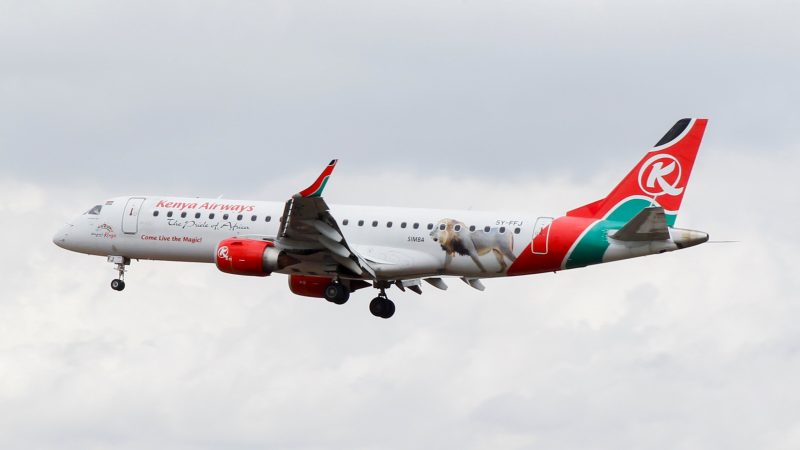
Kenya Airways has returned to losses, posting a net loss of KSh17.1 billion for the year ended 31 December 2025, reversing a KSh5.4 billion profit recorded a year earlier due to reduced capacity and operational disruptions.
The national carrier reported revenue of KSh161.4 billion, a drop of KSh27 billion compared to the previous year. Operating losses stood at KSh5.6 billion as operating costs declined slightly to KSh167 billion.
The airline said operations were significantly affected by the temporary grounding of three Boeing 787-8 Dreamliner aircraft. The disruption was linked to global supply chain constraints and limited engine availability, which affected maintenance timelines.
The reduced fleet availability cut long-haul capacity by about 20%, forcing the airline to adjust schedules and reduce frequencies across its network, limiting its ability to fully benefit from recovering global travel demand.
Financial position weakens
Kenya Airways negative asset position widened to KSh132 billion from KSh118.2 billion recorded in the previous year, highlighting continued financial strain.
The airline shares traded at KSh5.2 at the Nairobi Securities Exchange, giving it a market valuation of KSh30.2 billion as the government continues efforts to attract a strategic investor.
Chief Financial Officer Mary Mwenga said grounded wide-body aircraft, which generate significant revenue, had a major impact on earnings during the year under review.
Cargo volumes declined to 64,780 tonnes from 70,776 tonnes in the previous year, reflecting weaker demand in global freight markets.
Acting Chief Executive Officer George Kamal said the airline is focusing on cargo expansion to boost revenues. Cargo capacity has increased from 70 tonnes per day to 180 tonnes and is projected to reach 250 tonnes by mid-year through partnerships and additional capacity.
The airline expects cargo and maintenance operations to contribute up to 40% of total revenues.
Chairman Kiprono Kittony said the airline is prioritising restoration of fleet availability, operational stability and cost control while continuing to engage investors as part of a long-term restructuring plan.