
Constitutional lawyer and senior presidential economic adviser Makau Mutua on Tuesday mocked demonstrators protesting rising fuel prices, as a planned show of public anger in the capital drew a sparse turnout.
In a post on X, Mutua urged protesters to “go open the Strait of Hormuz,” using sarcasm to underscore the global dynamics influencing fuel costs. His remark came as a handful of demonstrators gathered in Nairobi central business district, far fewer than anticipated.
Steady morning rains dampened participation, leaving only small groups of mostly young activists chanting and waving Kenyan flags. Anti-riot police maintained a visible presence, monitoring the situation and dispersing clusters of protesters as tensions occasionally flared.
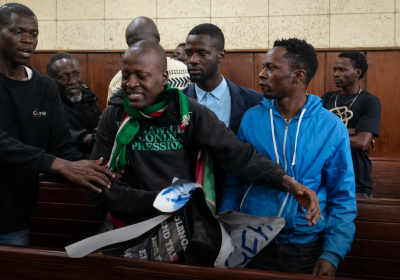
Some demonstrators shouted slogans against rising fuel prices, but the limited numbers highlighted the difficulty of translating online frustration into mass street action. Police arrested several individuals, with live television footage showing scuffles and forceful detentions.
Global pressures and local impact
Authorities had earlier warned that protests would be considered illegal without formal notification under public order laws, adding another layer of constraint to the demonstrations.
Mutua comments drew attention to the broader forces driving fuel price increases in Kenya. By referencing the Strait of Hormuz, a critical global oil transit route, he pointed to disruptions in international supply chains rather than purely domestic policy decisions.
The strategic waterway carries roughly a fifth of the world oil and liquefied natural gas. Any instability in the region can trigger immediate price shocks worldwide, including in import-dependent economies like Kenya.
Geopolitical tensions involving Iran, the United States and Israel have contributed to uncertainty in the region. Shipping risks and rising insurance premiums have pushed up costs, which are ultimately passed on to consumers.
According to the Energy and Petroleum Regulatory Authority, April pump prices in Nairobi were set at KSh197.60 per litre for Super Petrol and KSh196.63 for Diesel following a reduction of VAT to 8%.
The adjustment came after earlier announcements briefly pushed prices above KSh200 per litre, sparking public outrage and calls for protests. While the reduction offered some relief, many Kenyans continue to feel the strain of high energy costs on household budgets and businesses.
Economists say Kenya reliance on imported petroleum products leaves it vulnerable to global market volatility, where external shocks often outweigh domestic interventions.
Tuesday events underscored the challenges facing grassroots movements. Between adverse weather, legal restrictions and the complex global nature of fuel pricing, the protests failed to gain significant traction.