
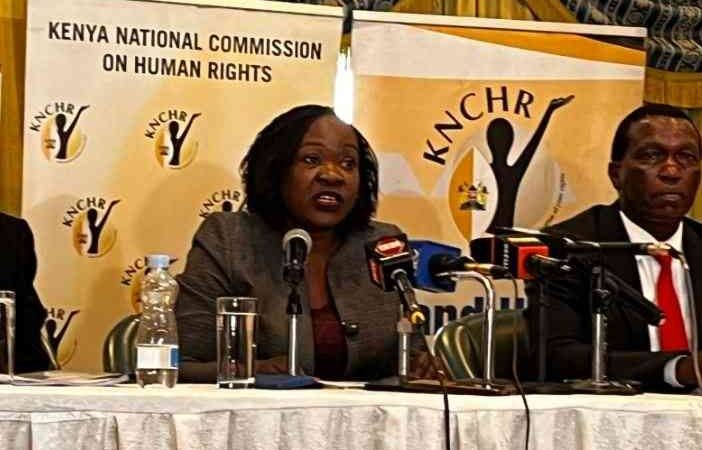
The Kenya National Commission on Human Rights has invited members of the public and stakeholders to submit memoranda and comments on the Draft Reparations Guidelines 2026, marking a significant step toward strengthening access to justice for victims of human rights violations.
In a public notice issued under Article 10(2)(a) of the Constitution of Kenya, the commission said the consultation process is intended to promote transparency, inclusivity and meaningful public participation in shaping policies that affect victims of rights abuses.
The commission, an independent national human rights institution established under Article 59 of the Constitution and operationalised through the Kenya National Commission on Human Rights Act Cap 71, said the proposed guidelines form part of broader reforms aimed at ensuring victims receive accessible, effective and timely reparations.
“In accordance with Article 10(2)(a) of the Constitution, stakeholders and members of the public are hereby invited to submit hard or soft copies of memoranda, comments and input,” the commission said in a statement issued Monday.
Public participation in justice reforms
The Draft Reparations Guidelines are designed to provide a structured framework for compensation, restitution, rehabilitation and other forms of redress for individuals and communities affected by human rights violations.
The development of the guidelines follows a judgment delivered on 4 December 2025 by the High Court in Kerugoya in consolidated petitions HCCHPET E010, E011 and E014 of 2024, which underscored the need for a clear and enforceable reparations framework.
The initiative is also anchored in Presidential Proclamation No. 1 of 2026 and Kenya Gazette Notice No. 3114 issued on 6 March 2026, providing policy backing for the process.
According to the commission, the guidelines are expected to standardise how claims are assessed and addressed, ensuring fairness, consistency and accountability in delivering justice to victims.
Officials said public input will play a critical role in refining the document before it is finalised and implemented, ensuring it reflects the lived experiences and needs of affected individuals and communities.
Stakeholders and members of the public have been urged to submit feedback in either hard or soft copy format. Submissions can be sent via email, delivered by post to P.O. Box 74359-00200, Nairobi or physically submitted at commission headquarters and regional offices across the country.
To guide responses, the commission has provided a standard template requiring participants to indicate the relevant section of the draft, quote the provision under review, propose amendments and provide justification for their recommendations.
The consultation process signals a renewed effort to build a justice system that is responsive, inclusive and grounded in constitutional values, while strengthening accountability for human rights violations across Kenya.