
As Oil hits $100 a barrel, Africa split between windfall and crisis
 March 12, 2026
8 min read
March 12, 2026
8 min read
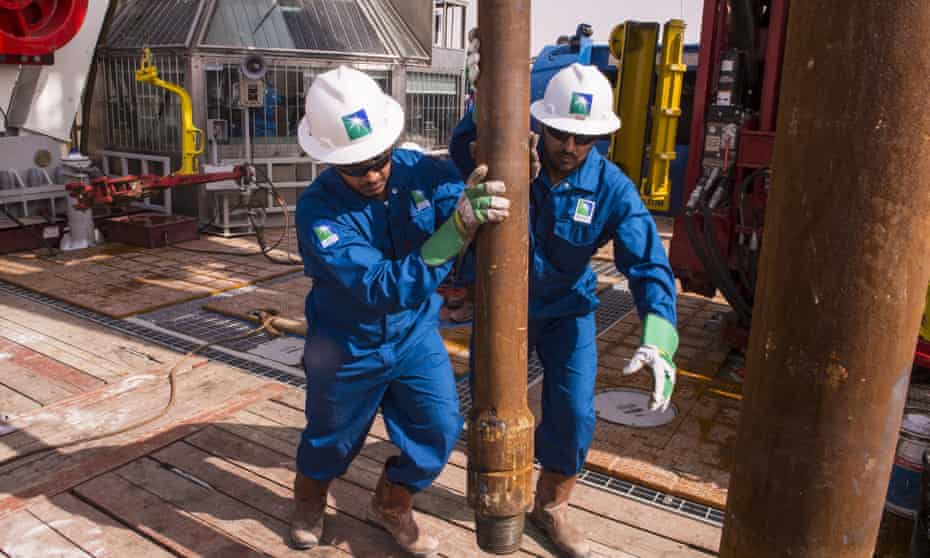
Oil surpasses $100 a barrel after Middle East conflict, triggering inflation, budget pressure, and economic uncertainty across Africa. Photo credit: Handout/EPA
The USD 100 barrier has been broken. On Monday, 9 March 2026, Brent crude — the global benchmark — settled at USD 106 per barrel after briefly spiking to around USD 120 during intraday trading. That record level, not seen since 2022, arrived fewer than 10 days after the onset of open military hostilities in the Middle East, triggered by U.S. and Israeli strikes on Iran on 28 February. Markets reacted with the speed and severity that energy analysts had long warned was possible: a single geopolitical convulsion, and the price of the world’s most traded commodity lurched into territory that reshapes budgets, breaks household finances, and rewrites political calculations from Lagos to Nairobi to Cairo.
For Africa — a continent of more than 1.4 billion people whose economies range from major petroleum exporters to nations that import every drop of fuel they burn — the USD 100 threshold is not just a number. It is a fault line. On one side sit the producers, watching revenues swell. On the other stand the importers, watching their currencies weaken, their fuel subsidies balloon, and their central banks sweat. The divide is not new, but the sharpness of the current price spike is making it brutal.
Analysis
For Africa oil exporters, a revenue windfall with hidden strings attached
Nigeria, Angola, Libya, Algeria, Gabon, the Republic of Congo, Equatorial Guinea, and South Sudan are among the continent’s significant crude producers. On the surface, a Brent price above USD 100 looks like an unambiguous gift. Nigeria’s 2026 federal budget was constructed on a benchmark oil price of USD 64.85 per barrel. Every dollar above that benchmark theoretically adds hundreds of millions of naira to government coffers — money that could be channelled into infrastructure, debt service, or social spending.
Angola, Africa’s second-largest oil producer, finds itself in a similar windfall position. The Angolan government views the price surge as positive but warns the rally may prove temporary, and that higher global prices also inflate the country’s import bill for essential goods. Analysts at the African Development Bank noted that for every USD 10-per-barrel increase in oil prices, resource-rich African nations can collectively expect revenue improvements running into several billion dollars annually.
For every USD 10-per-barrel rise in oil prices, Africa resource-rich nations can expect revenue improvements running into billions of dollars annually — but Dutch disease and fiscal mismanagement can erase those gains within a single budget cycle.
But economists are quick to attach caveats that temper the optimism. The phenomenon known as “Dutch disease” — in which a commodity boom causes currency appreciation that hollows out manufacturing and agriculture — has plagued African oil states before. When petrodollars flood in faster than institutions can manage them, non-oil sectors atrophy, import dependency rises, and structural vulnerabilities deepen rather than resolve. Nigeria lived through precisely this dynamic during the oil boom years of the 2000s and early 2010s, emerging with a broader economy that had barely diversified and a public infrastructure deficit that swallowed whatever fiscal space the oil money had created.
Furthermore, production capacity remains a stubborn constraint. Nigeria has struggled for years to consistently hit its Organisation of the Petroleum Exporting Countries quota, let alone exceed it, because of pipeline vandalism in the Niger Delta, ageing infrastructure, and underinvestment in upstream operations. A high-price environment helps, but only if the barrels can actually reach the market. The same ageing-infrastructure problem plagues several other African producers, meaning the price windfall may be smaller in practice than it appears on a spreadsheet.
For oil importers, the price spike arrives as an unwelcome tax on survival
The other half of Africa’s oil equation is starker. Roughly 30 of the continent’s 54 countries are net oil importers, among them some of its most populous and economically dynamic: Ethiopia, Kenya, Tanzania, Rwanda, Senegal, Ghana, Côte d’Ivoire, and Egypt. For these nations, a crude price above USD 100 operates as an involuntary tax — a transfer of wealth from domestic consumers and governments to global oil markets.
The transmission mechanism is direct and punishing. Higher crude prices push up the cost of refined petroleum products — diesel, petrol, kerosene, aviation fuel — which in turn elevate the cost of transportation, electricity generation, and manufacturing inputs. Inflation follows almost immediately, and the combination of high inflation and high borrowing costs would be a blow to households and businesses across Sub-Saharan Africa. In economies where food must be trucked across vast distances, where generators substitute for unreliable grid power, and where small businesses run on thin margins, even a modest fuel price increase can tip households into food insecurity and enterprises into insolvency.
Kenya offers a representative case study. Kenya is staring at higher inflation from elevated fuel pump prices after oil benchmarks crossed USD 120 per barrel — the highest since June 2022. The Kenya shilling has faced persistent depreciation pressure, and a sustained oil price above USD 100 risks accelerating that trend, compounding inflation while simultaneously eroding the purchasing power of Kenyan households. The government fuel subsidy bill — already a fiscal pressure point — is set to expand significantly, forcing Nairobi to confirm fuel imports have been locked in only through April 2026, buying a temporary but narrow buffer against the price storm.
That tension is replicated across the import-dependent half of the continent. Ghana, which only recently began its own modest oil production at the Jubilee Field, still requires far more petroleum products than it produces. The country is also navigating a post-International Monetary Fund bailout fiscal consolidation programme, leaving it little room to absorb additional energy-related expenditure without breaching deficit targets or cutting other spending. Egypt, meanwhile, has one of Africa’s largest fuel subsidy programmes and has been incrementally reforming it under IMF pressure; a prolonged period of USD 100-plus oil threatens to reverse years of painful reform progress across the continent’s import-dependent economies.
Geopolitical volatility and the long road to African energy resilience
The immediate catalyst for the price surge — the military escalation in the Middle East — underscores a structural vulnerability that African policymakers have identified but not yet solved: the continent’s energy security is hostage to geopolitical events happening thousands of miles away. Whether the conflict involves the Strait of Hormuz, Gulf of Aden shipping lanes, or infrastructure servicing major oil-producing nations, Africa feels the shock regardless of its own political choices or economic management.
This reality gives new urgency to a conversation that has been gaining momentum across African capitals and within multilateral institutions: the need for the continent to accelerate energy diversification and reduce its existential exposure to a single global commodity’s price cycle. The African Continental Free Trade Area AfCFTA, if fully implemented, offers one pathway — enabling intra-continental trade in refined petroleum products among producer and importer nations at negotiated rates, insulating members somewhat from the pure volatility of global benchmarks.
Renewable energy represents an even more fundamental route out of the vulnerability trap. Africa holds some of the world’s most extraordinary solar and wind resources — the Sahara alone receives enough solar irradiance to theoretically power the entire planet many times over. Countries such as Morocco, Kenya, South Africa, and Ethiopia have made meaningful investments in renewables, but the pace of transition remains far too slow to offer near-term protection against oil price shocks of the current magnitude. Grid infrastructure, financing costs, and regulatory barriers continue to impede the scaling of clean energy across the continent.
In the meantime, central banks across import-dependent Africa are likely to face significant pressure in the months ahead. The inflationary impulse from higher fuel prices will force monetary policymakers to weigh rate increases — which slow growth and increase borrowing costs — against the political risks of allowing price levels to rise unchecked. For nations already managing elevated debt loads and sluggish post-pandemic recoveries, the room to manoeuvre is narrow.
The current oil shock, arriving as it does against a backdrop of still-elevated global interest rates and tightening external financing conditions, may prove more damaging than previous price spikes for precisely that reason: African economies are carrying more debt and have less fiscal space than they did during comparable shocks in prior decades. The combination creates a scenario where even nations technically benefiting from higher oil prices — the exporters — may find that the macroeconomic environment surrounding the windfall is too turbulent to translate revenue gains into lasting development outcomes.
What is clear, across both the producer and importer divide, is that Africa’s relationship with oil — as a source of revenue, as an import burden, as a driver of inflation, and as a geopolitical variable — remains one of the most consequential economic questions the continent faces. The breach of USD 100 per barrel is not merely a market milestone. It is a pressure test of fiscal management, of institutional resilience, and of the long-delayed imperative to build energy systems that no longer depend on decisions made in far-off capitals and conflict zones to determine whether African citizens can afford to fill their tanks, power their homes, or put food on their tables.
As Brent crude hovers above USD 100 and markets watch the Middle East with anxious eyes, Africa is once again learning — at real cost — that energy security and economic sovereignty are inseparable. The path to both runs not through the oil fields of distant continents, but through the hard work of structural transformation at home.
