Tanzania’s opposition says 700 killed in election protests
 October 31, 2025
3 min read
October 31, 2025
3 min read
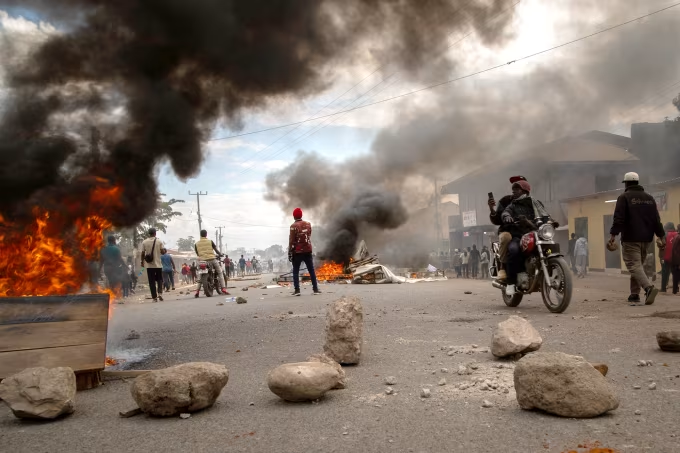
People protest in the streets of Arusha, Tanzania, on election day, on October 29. AP
Tanzania’s main opposition party, Chadema, says at least 700 people have been killed in election protests, marking a dramatic escalation in the violent unrest that has gripped the country since a contentious vote.
The claims, which far exceed other estimates, follow days of demonstrations over an election that critics say was undermined by the exclusion of key opposition candidates and a crackdown on dissent.
Casualty Figures and International Response
John Kitoka, a spokesperson for Chadema, told Agence France-Presse that the party’s figures were gathered by members visiting hospitals and clinics. “As we speak, the figure for deaths in Dar [es Salaam] is around 350 and for Mwanza it is 200-plus. Added to figures from other places around the country, the overall figure is around 700,” he said. Kitoka warned the actual toll could be higher, citing killings that may have occurred during a night-time curfew imposed by the government.
The scale of the casualties was partially corroborated by a security source speaking to AFP on condition of anonymity, who reported knowledge of “more than 500 dead, maybe 700-800 in the whole country.” However, the international community’s figures have been lower. Amnesty International stated it had received information of at least 100 fatalities, while the UN Human Rights Office (OHCHR) said it was “alarmed” by reports of deaths and injuries, noting it had received credible accounts of security forces using live ammunition and teargas in several regions.
Background of the Unrest
The protests erupted on election day last Wednesday, with demonstrators decrying what they called the stifling of democracy after the disqualification of major opposition presidential candidates. The vote was expected to solidify the power of President Samia Suluhu Hassan, whose administration has faced accusations of intensifying repression in the lead-up to the polls. Key opposition figures, including Chadema vice-chair Tundu Lissu and ACT-Wazalendo leader, were barred from contesting the presidency.
In response to the spreading demonstrations, which saw crowds attack police and damage properties linked to the ruling party, the government imposed a curfew and deployed a heavy police and military presence.
Reports of significant countrywide internet disruption were also documented. Army Chief General Jacob John Mkunda condemned the violence, labeling protesters as “criminals” and vowing that security forces would work to contain the situation.
Calls for Restraint and Transition
Amid the crisis, Kitoka demanded that the government “stop killing our protesters” and called for the establishment of a transitional government to organize a free and fair election. “Stop police brutality. Respect the will of the people which is electoral justice,” he said.
Human rights advocates have echoed calls for restraint. “It is unjustified for security agencies to use force,” said human rights lawyer Tito Magoti, urging the president to “refrain from deploying the police against the people.” He captured the mood of many protesters, stating, “She must listen to the people. The mood of the country is that there was no election.”
The Tanzanian government has not yet issued an official public comment on the specific casualty figures presented by the opposition.

Related Articles