

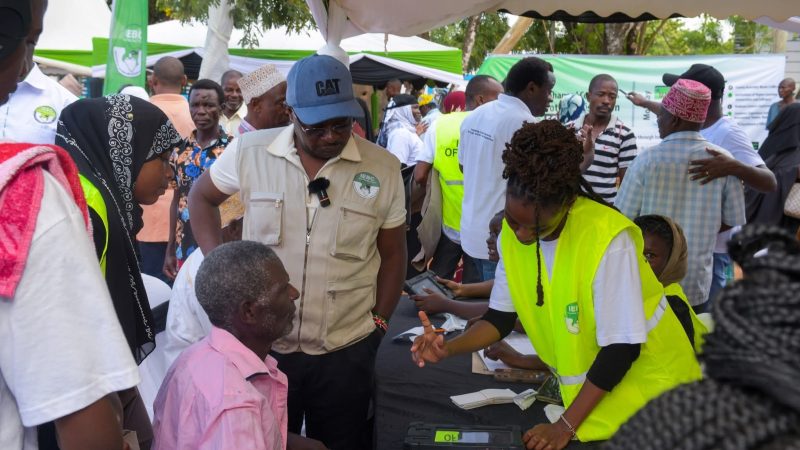
The Independent Electoral and Boundaries Commission has launched a nationwide mass voter registration exercise, marking a critical phase in Kenya electoral process. The commission says the exercise aims to expand the voter base and ensure eligible citizens are included ahead of future elections.
The registration drive comes as political stakeholders emphasize both participation and transparency. The Democratic Party has urged Kenyans to turn out in large numbers, describing voter registration as a constitutional right and a cornerstone of democratic governance. Party officials say registering and voting enables citizens to determine the leadership and direction of the country.
The exercise is unfolding under scrutiny following findings from a past audit conducted by KPMG on the voter register before the 2022 General Election. According to the audit, the register contained significant anomalies, including 481,711 duplicate records and 226,143 cases where individuals were registered using identity cards that did not belong to them.
The audit also flagged 246,465 records linked to deceased individuals and 164,269 registrations tied to invalid identification documents, including IDs and passports. These discrepancies have fueled concerns over the credibility of the voter register and the need for stricter safeguards.

Further, the report identified 14 unaccounted for returning officers who allegedly had extensive system access. The auditors noted that these individuals could manipulate the register, including transferring, deleting, inserting and updating voter records.
The audit revealed deeper issues within the Integrated Database Management System, where the voter register is maintained. The 14 officers were reportedly not officially gazetted but had worked alongside 290 constituency election officials in previous polls.
According to the findings, the system had 513 generic accounts compared to nine verified accounts, raising concerns about accountability and access control. The report also highlighted that some users had elevated privileges, allowing them to alter voter details and deactivate records, including those of deceased voters.
Additionally, auditors found that system safeguards were weak, noting that inactive accounts were not automatically deleted after 90 days as required by IEBC policy. This gap potentially allowed former staff or unauthorized users to retain access to sensitive electoral data.
The audit also indicated that the voter register contained over two million questionable entries, including duplicates and registrations using fake documents. During the cleaning process, auditors observed cases where new voters were mysteriously added, raising further concerns about data integrity.
Records reviewed showed that the Smartmatic system held over 21,970,597 voter entries as of 5 May 2022. After a deduplication process involving 2,184,472 records, the final register stood at 21,710,728 voters.