Sakaja rejects NMS return claims over KSh80bn national pact
 February 26, 2026
3 min read
February 26, 2026
3 min read

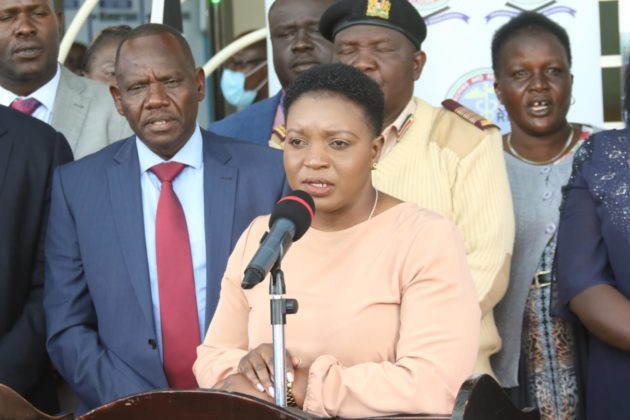
Nairobi Governor Johnson Sakaja. Photo credit: NCCG
Nairobi Governor Johnson Sakaja appeared before the Senate Devolution and Intergovernmental Relations Committee on Thursday to rebuff mounting accusations that a landmark KSh80 billion cooperation agreement with the national government effectively resurrects the defunct Nairobi Metropolitan Services — an agency that was dissolved after critics condemned it as an unconstitutional takeover of devolved powers.
The agreement, signed 17 February 2026 at State House in the presence of Prime Cabinet Secretary Musalia Mudavadi and witnessed by President William Ruto, establishes a joint oversight committee linking the two levels of government. Sakaja told senators the deal does not create a new governance entity, transfer county employees to the national government or undermine Nairobi City County constitutional mandate.
“This is not NMS. No county staff are being transferred to the national government and none are being seconded to the county. There is no human resource provision in the agreement. The county continues to perform its constitutional functions.”
— Governor Johnson Sakaja, Senate testimony, 26 February 2026
A contested precedent
NMS was established in March 2020 after then-Governor Mike Sonko — who was later impeached — signed over control of key county functions including health, transport, public works and disaster management to the national government. Critics argued at the time that the move violated Kenya’s devolved system of governance enshrined in the 2010 Constitution. The agency was wound down and its functions reverted to Nairobi City County following Sonko’s removal from office.
The memory of that episode has charged political reaction to the new deal, with opponents drawing explicit parallels between the two arrangements.
What the KSh80 billion covers
Under the framework, the national government commits financial and operational support to services that are constitutionally assigned to the county. The pact covers solid waste management, road construction and rehabilitation, water and sewerage infrastructure, stormwater drainage, public lighting, affordable housing and the environmental regeneration of Nairobi rivers.
Key budget allocations
- KSh15 billion — Long-term sewer expansion
- KSh9 billion — Trunk sewer networks
- KSh8.7 billion — Roads, bridges and drainage
- KSh6 billion — New sewer treatment plant
- KSh3.7 billion — Street lighting
- KSh3.3 billion — Informal settlement upgrading
- KSh3 billion each — Gigiri–Shauri Moyo corridor and last-mile connectivity
- KSh2.1 billion — Ng’ethu Water Treatment Plant
- KSh1.5 billion — Transformers and prepaid bulk connections
Legal and political scrutiny
Senators pressed Sakaja on whether the public participation process required under Kenya’s devolved governance framework had been followed before the agreement was signed. The governor acknowledged the document remains open to review but stood by its legal footing.
“We have followed the Constitution 100%. Where improvements are needed, both levels of government will review,” he said.
President Ruto has argued the arrangement is necessary because Nairobi, despite carrying obligations as a regional capital and an international diplomatic hub, is funded under the same revenue-sharing formula applied to other counties — a structural mismatch the President says demands an exceptional intervention.
The pact has nonetheless attracted legal and civic opposition. A High Court petition challenging the agreement’s constitutionality has been certified as urgent and is set for hearing on 16 March 2026. Constitutional rights organisation Katiba Institute has separately demanded full disclosure of the deal’s legal basis and financing arrangements, raising concerns about transparency and accountability.
Within the county assembly, more than 55 Members of County Assembly have signed a motion seeking Sakaja impeachment, arguing the agreement amounts to a voluntary cession of devolved powers. Nairobi MCAs have also launched public hearings to interrogate the terms of the deal, signalling that the political fallout is far from over.
Sakaja maintained Thursday that any necessary improvements to the agreement would be addressed through mutual review between both levels of government, and that the pact as signed fully complies with Kenya’s constitutional requirements.

Related Articles