Governors defend ECDE record amid funding criticism
 March 2, 2026
3 min read
March 2, 2026
3 min read

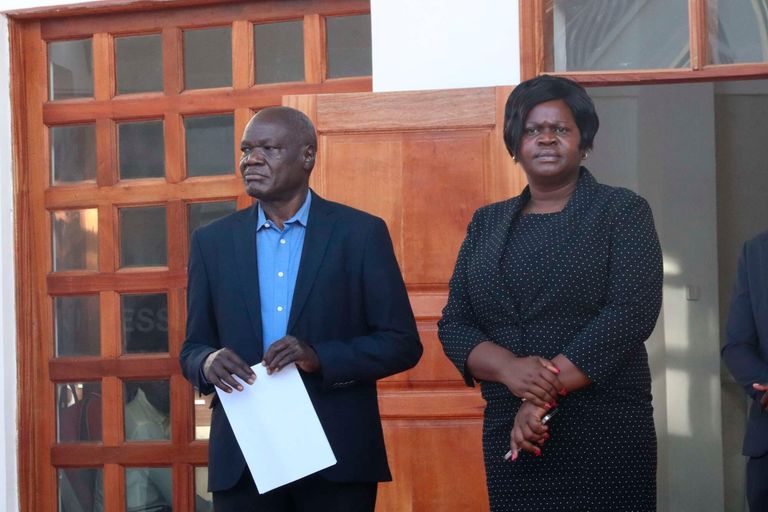
Anne Waiguru flanked by other governors. PHOTO/COURTESY
In Kenya, where education starts early, governors are fighting back against claims of poor management in Early Childhood Development and Education, or ECDE as they point fingers at a lack of funds from the start. This comes after sharp words from the national education team.
Recently, at a Senate retreat in Naivasha, Basic Education Principal Secretary Julius Bitok called out counties. He said some kids still learn under trees or in rundown buildings. “It’s sad,” he told senators. “We need safe, modern centers for our children.”
Bitok didn’t stop there. He slammed the neglect of school meals. Many places lack proper feeding programs. Kids get whatever is around, if anything.
Then there’s the teachers. About four million young learners depend on them. But in many counties, salaries come late. No pensions. It’s like they’re volunteers. “An unhappy teacher can’t nurture a child’s mind well,” Bitok warned. He pushed senators to watch counties closer.
Governors weren’t quiet. Leading the charge was Kericho Governor Erick Mutai. He’s chair of the Council of Governors’ Education Committee. Mutai argued the ECDE role was handed over without a price tag.
“When the Constitution came in 2010, no one figured out the costs,” Mutai said. “Counties got the job but no money to match.”
Still, counties have stepped up. They use their share of national revenue and local funds. Mutai highlighted progress. Enrollment in pre-primary jumped 3.8 percent by 2025. Now, over 2.95 million kids are in class.
Schools grew too. A 2.5 percent rise brings the total to 48,721 ECDE centers. In 2025 alone, counties built more than 5,950 new classrooms. “We went from trees to real buildings,” Mutai noted with pride.
On teachers, counties started from zero. Before devolution, many weren’t trained or recognized. Now, over 50,104 pre-primary teachers are on payroll. Counties provide books, desks, and chairs too.
Feeding is another win. With help from partners, counties crafted a national policy. It aims for nutritious meals everywhere. This counters Bitok’s worries about uneven programs.
Vocational Training Centers, or VTCs, train these teachers. Counties push for more. They give capitation funds. But again, no initial costing. The national government gave Sh5 billion once. Then stopped around 2018.
“VTCs scrape by on what we can spare,” Mutai said. It’s a heavy load for counties.
The Senate’s Education Committee has been checking. Chair Betty Montet visited nine counties. Met 29 governors in eight months. Findings? Not great.
“On the ground, it’s been tough,” Montet admitted. “Discouraging at times.” But she sees hope. Governors are improving. “Things are shifting. In six months, expect big changes.”
This debate shows Kenya’s devolution pains. National and county levels clash over money and duties. ECDE is key for the future. Four million kids’ foundations are at stake.
Governors say they’ve done much with little. Critics want more oversight. As Kenya grows, fixing funding gaps could help. For now, the push and pull continues.
It’s a story of effort amid limits. Counties build classrooms and hire teachers. Yet challenges linger. Better funding might bridge the gap. Kenya’s young learners deserve it.

Related Articles