
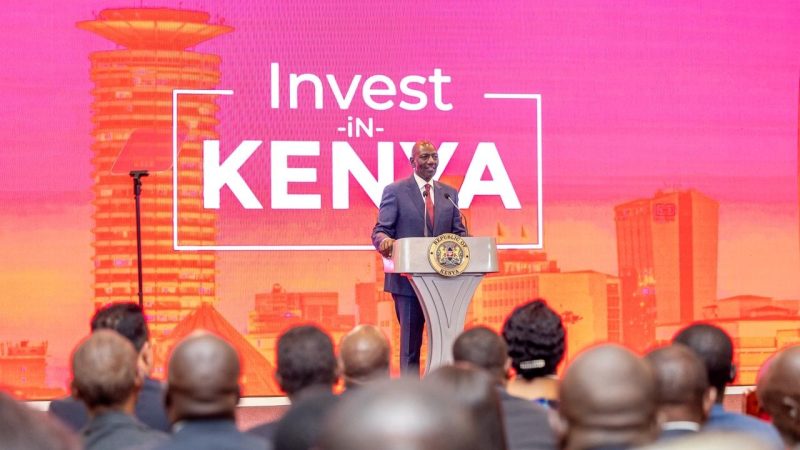
President William Ruto has unveiled a raft of tax incentives and regulatory reforms aimed at attracting at least USD2.5 billion in new investments during the 2026 Kenya International Investment Conference.
The government is positioning the forum as part of a broader strategy to strengthen Kenya’s role as a regional investment hub amid global economic uncertainty and tightening capital flows.
“As we navigate these evolving contexts, our collective responsibility is to ensure that our economies remain resilient, adaptable, and capable of withstanding global shocks,” Ruto said.
Reforms to boost investments
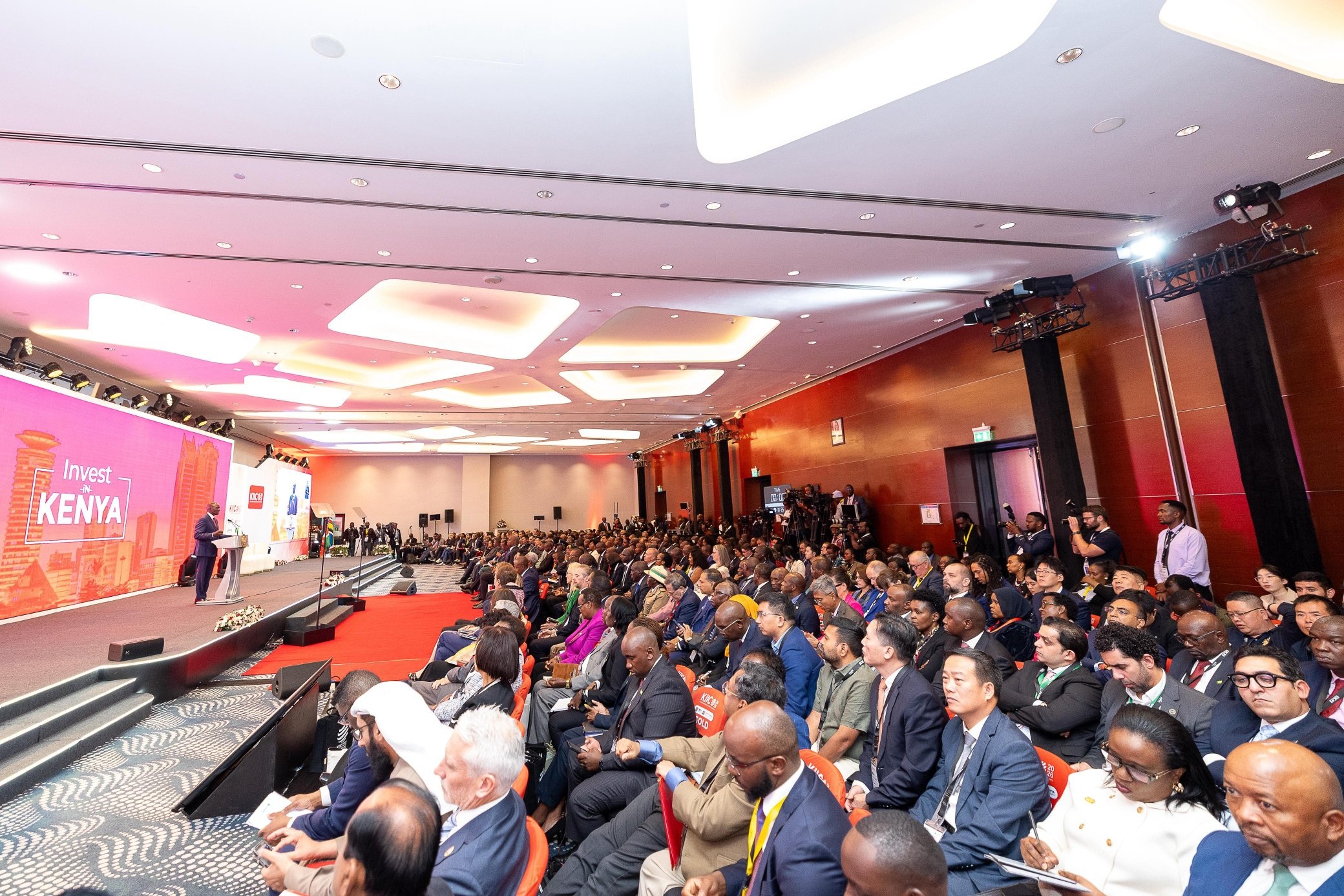
Ruto said the government has already removed several regulatory and tax barriers that previously discouraged foreign investment.
Key measures include provisions allowing companies to offset verified tax claims against future liabilities, zero-rating VAT on exported services and removing the 30% domestic ownership requirement for ICT firms.
The government is also planning to introduce clearer transfer-pricing rules and improved VAT refund mechanisms to enhance liquidity for investors.
A digital one-stop investment platform is expected to be rolled out by the end of the year, allowing investors to secure permits and licences entirely online.
In addition, a new investment law is being prepared to replace the 2004 framework, with a focus on faster approvals and improved aftercare services.
“These reforms are being reinforced by broader regulatory improvements, including the fast-tracking of the Business Laws Amendment Bill 2026 and the introduction of the Invest Kenya Bill to establish a unified modern framework for investment facilitation,” Ruto said.
Stronger economic signals boost investor confidence.

Ruto pointed to improving macroeconomic indicators to support Kenya’s investment case, noting that foreign direct investment inflows rose by more than 15% last year to exceed USD2 billion for the first time.
The government has also cited a recent sovereign credit upgrade as evidence of improved fiscal and monetary stability.
Domestic capital markets have also shown strong performance. The Nairobi Securities Exchange ranked among Africa’s best-performing markets in 2025, delivering returns of more than 50% in dollar terms.
A recent multi-billion listing by Kenya Pipeline Company has further been presented as a signal of renewed investor confidence in the local market.
Investors focus on operating conditions

Investors at the conference, however, signalled that capital decisions are increasingly driven by operating conditions rather than macroeconomic indicators.
Arise Integrated Industrial Platforms said it plans to invest more than USD3 billion in developing special economic zones in Kenya over the next three years.
Executive Director Nikhil Gandhi said manufacturers are prioritising predictable power tariffs, clear tax structures and policies that support large-scale industrial production.
“Capital is looking for stability. Investors are looking for enablers in the form of power tariffs and policy frameworks that unlock key sectors,” Gandhi said.
The focus on electricity pricing, industrial land and export incentives suggests Kenya’s investment push is increasingly being tested on its ability to compete as a manufacturing base.