
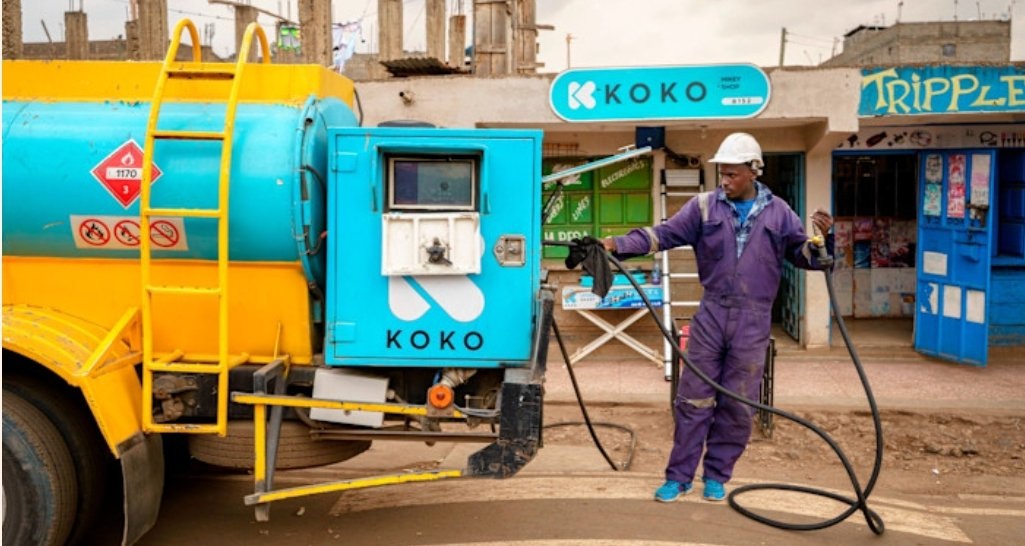
The collapse of clean cooking startup Koko Networks has triggered a KSh6.4 billion (GBP36.85 million) loss for its UK parent company, following the Kenya government refusal to approve exports of carbon credits, according to newly filed financial disclosures.
Koko Networks UK Limited wrote off GBP35.5 million (KSh6.15 billion) in loans extended to its Kenya subsidiary, acknowledging the debt would not be recovered after the Nairobi-based unit entered administration.
The filings show the UK-based firm financial position deteriorated sharply after its sole carbon credit supplier, Koko Networks Limited, ceased operations. The Kenya unit had been central to the group business model, supplying credits sold internationally.
The Kenya subsidiary filed for administration on 1 February after authorities declined to issue a letter of approval required to export carbon credits into compliance markets. Officials argued that approving the credits risked exhausting Kenya allocation in global carbon trading systems.
Without access to these regulated markets, Koko business model collapsed. Compliance carbon markets offer significantly higher prices — around USD20 per credit — compared to voluntary markets, where prices are roughly one-tenth.
“The directors have concluded that there is no realistic alternative but that the company is unable to continue in operational existence for the foreseeable future,” the filings state.
Business advisory firm PwC Kenya has taken over administration of the local entity, as efforts begin to recover value from remaining assets.
Massive write-offs and asset impairment
In addition to loan write-offs, the UK parent impaired GBP1.32 million (KSh229 million) in intangible assets tied to its intellectual property portfolio. These include patents covering fuel distribution systems across markets such as Kenya, India, Nigeria and South Africa.
The company said the patents had provided exclusive commercial rights but were devalued following the operational shutdown.
The filings also indicate uncertainty around other liabilities owed to related entities, though details remain unclear.
Financial statements show the company recorded a pre-tax loss of GBP14 million (KSh2.4 billion) for the year ending December 2024, an improvement from a GBP90 million (KSh15.6 billion) loss the previous year.
Revenue rose to GBP44.7 million (KSh7.7 billion) in 2025 from GBP38.4 million (KSh6.6 billion) in 2024, reflecting growth that had been expected to support profitability if access to compliance markets had been secured.
Subsidy-driven growth strategy unravels
Founded in Kenya in 2019, Koko Networks built its business on subsidised clean cooking solutions. The company sold bioethanol stoves valued at KSh15,000 for as little as KSh1,500, while fuel priced at KSh200 per litre was offered at half that cost.
The losses from these subsidies were intended to be offset by revenue from carbon credit sales, particularly in higher-value compliance markets used by major emitters such as airlines.
However, the inability to secure regulatory approval in Kenya eliminated access to these markets, undermining the entire financial model.
The company had invested more than USD300 million in Kenya, making it its largest market. In 2024, the Multilateral Investment Guarantee Agency, part of the World Bank Group, insured Koko investment for USD179.6 million (KSh23.28 billion) in what was described as the first carbon-linked political risk cover.
Kenya authorities cited concerns over transparency and the authenticity of carbon credits generated by the company in declining approval. The decision came despite a June 2024 agreement aligned with Article 6 of the Paris Agreement, which could have enabled participation in compliance markets.
Koko did not publicly disclose detailed data on its bioethanol fuel sales, a factor that may have influenced regulatory scrutiny.
PwC Kenya is now overseeing the sale or potential acquisition of Koko remaining assets, including fuel-dispensing infrastructure, vehicles, software systems and office equipment.
It remains unclear whether the company will pursue insurance claims related to the denied approval, which could expose the Kenya government to significant compensation liabilities.
The ultimate parent company of the Koko group is registered in Mauritius.