
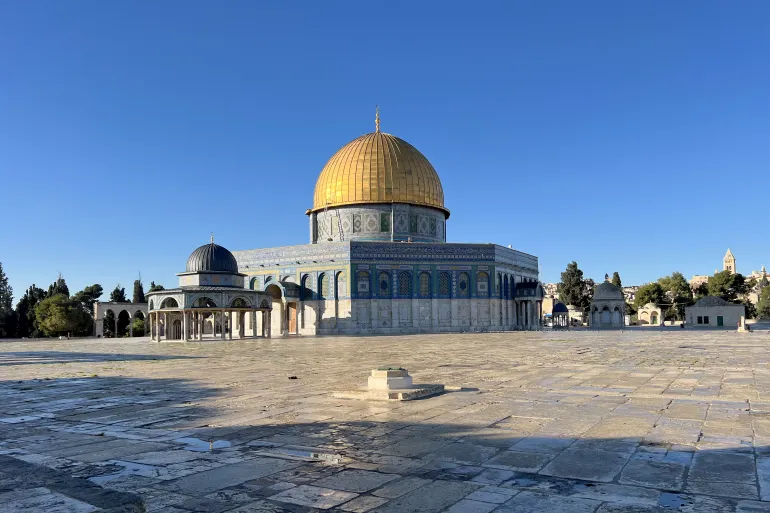
Israeli authorities have barred Palestinians from performing Eid al-Fitr prayers at Al-Aqsa Mosque in occupied East Jerusalem, citing heightened security concerns linked to ongoing regional tensions.
According to officials, the restrictions are part of broader emergency measures implemented during the conflict. The decision effectively prevents thousands of Muslim worshippers from gathering at Islam’s third-holiest site to mark the end of Ramadan.
Palestinian religious leaders and community groups have urged worshippers to assemble near Jerusalem’s Old City and pray as close as possible to the mosque compound. Similar calls have been made in past years when access was restricted.
Tensions escalate in Jerusalem’s Old City
The ban comes amid a pattern of confrontations in and around the Old City. In previous instances during Ramadan, Israeli police dispersed crowds attempting to pray outside restricted zones using batons, tear gas and stun grenades.
Residents say the latest measures have deepened tensions across East Jerusalem. Streets that are typically crowded in the days leading up to Eid were largely deserted, with a visible security presence limiting movement.
Observers note that restrictions on religious gatherings at sensitive sites often amplify broader political tensions.
Economic strain compounds hardship
Beyond religious impact, the restrictions have also disrupted daily life and commerce. Israeli authorities enforced limits on public assembly and shuttered most businesses in the Old City, allowing only pharmacies and essential food stores to remain open.
Palestinian shopkeepers, many of whom rely heavily on Ramadan and Eid sales, say the closures have left them struggling. Several traders, speaking anonymously over fear of repercussions, described significant financial losses and uncertainty about recovery.
The usually vibrant markets—filled with families preparing for the holiday—stood nearly empty, reinforcing what residents described as a subdued and tense atmosphere.