

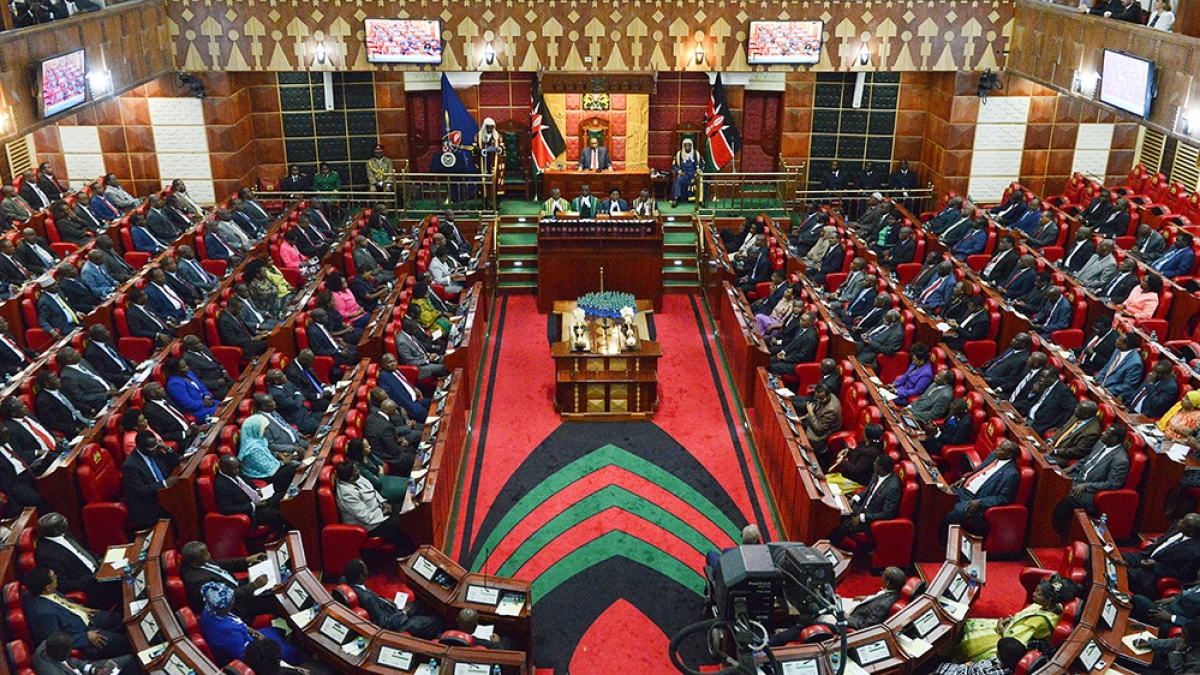
Kenyan lawmakers have raised concerns over the government ability to effectively spend KSh287 billion allocated in a supplementary budget, warning that weak absorption could worsen fiscal imbalances and stall development.
Members of Parliament questioned ministries, departments and agencies on their readiness to utilise the funds, noting that only two months remain before the close of the financial year. The concerns emerged during deliberations by the Budget and Appropriations Committee.
The committee said the supplementary estimates will increase the national budget by KSh287.4 billion, pushing the fiscal deficit to KSh1.186 trillion. This marks a sharp rise from the previously approved deficit of KSh933 billion.
According to the Parliamentary Budget Office, the deficit will now stand at 6.2% of gross domestic product, up from 4.8%. The increase is largely driven by higher recurrent and development spending.
Recurrent expenditure rose by KSh201.1 billion, representing an 11% increase, while capital expenditure grew by KSh86.3 billion, or 12%.
Heavy reliance on domestic borrowing
To finance the widening deficit, the government plans to increase domestic borrowing by KSh323.1 billion, bringing total domestic borrowing to KSh947.8 billion.
The Parliamentary Budget Office warned that heavy reliance on domestic borrowing could crowd out private sector access to credit, potentially slowing investment and economic activity.
Lawmakers also questioned the decision to expand spending despite revenue shortfalls. By December, revenue collection had fallen below target by KSh100 billion.
Kitui Central MP Makali Mulu challenged the Treasury proposals, questioning whether the budget framework remains realistic given the underperformance.
“Do we still go on to discuss a budget that is fundamentally wrong?” he asked.
The Parliamentary Budget Office also highlighted persistent low absorption of development funds. Historical data shows that actual spending on development projects has remained largely unchanged despite rising overall budgets.
In the 2018/19 financial year, development expenditure stood at KSh586.14 billion out of a KSh2.4 trillion budget. By 2024/25, development spending had only slightly increased to KSh589.56 billion, even as the total budget rose to KSh3.98 trillion.
The findings point to ongoing inefficiencies in project implementation.
Debt servicing pressures intensify
Rising public debt servicing costs continue to constrain fiscal flexibility. Interest payments now account for more than 25% of the total budget, up from 15% in the 2018/19 financial year.
In the current financial year, debt servicing is projected at KSh1.097 trillion, limiting funds available for essential services and development.
The Parliamentary Budget Office attributed the trend to sustained fiscal deficits averaging 7.4% of gross domestic product over several years.
Meanwhile, total government expenditure is expected to rise to KSh4.62 trillion under the supplementary budget, up from KSh4.3 trillion. Transfers to counties remain unchanged at KSh415 billion.
Lawmakers have called for greater accountability and realistic fiscal planning, warning that continued borrowing and weak spending efficiency could undermine economic stability.


