Tanzania’s Samia Suluhu wins disputed election with 98% of vote
 November 1, 2025
3 min read
November 1, 2025
3 min read
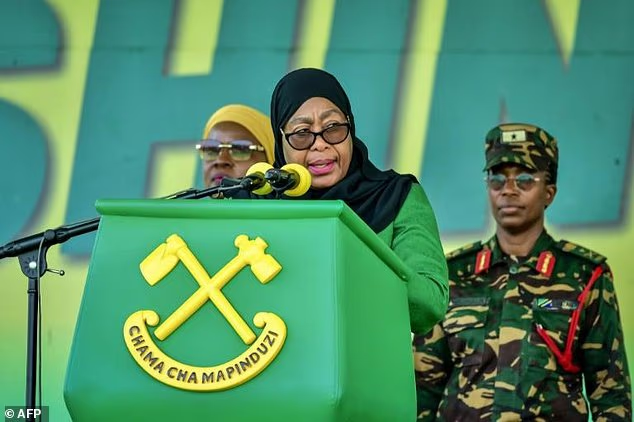
Tanzanian President Samia Suluhu Hassan has been declared the winner of a disputed election with 98% of the vote. AFP
Tanzanian President Samia Suluhu Hassan has been declared the winner of a disputed election with 98% of the vote, a stunning official margin that follows a campaign critics say was skewed by the suppression of her main rivals.
The Independent National Electoral Commission announced the results early Saturday, cementing the rule of the Chama Cha Mapinduzi party, which has held power for decades.
The landslide victory, however, is being contested by opposition groups who allege the process was less a contest and more a coronation, marred by an unprecedented pre-election crackdown.
Opposition figures barred from race
The outcome amplifies concerns among rights monitors and Western capitals about the direction of Tanzanian democracy. The path to the 29 October vote was marked by the exclusion of prominent opposition figures.
Tundu Lissu, leader of the main opposition Chadema party, has been jailed for months on charges of treason after calling for electoral reforms. Another key challenger, Luhaga Mpina from the ACT-Wazalendo group, was barred from running, leaving Suluhu to face 16 little-known candidates from smaller parties.
Election day unrest

The election itself was tense, with demonstrators taking to the streets in major cities to protest the process and demand a halt to the vote count. The government deployed the military to support police in quelling riots, and many Tanzanians experienced significant disruptions to internet connectivity, a common tactic during periods of political unrest.
International criticism mounts
International human rights organizations have documented a pattern of repression in the lead-up to the polls. Amnesty International cited cases of enforced disappearances, arbitrary arrests, and extrajudicial killings.
In June, a United Nations panel of human rights experts expressed alarm over more than two hundred cases of enforced disappearance since 2019, pointing to a “pattern of repression” designed to silence dissent.
The International Crisis Group, in a recent analysis, stated that President Suluhu Hassan had overseen “an unprecedented crackdown on political opponents.” The report highlighted curbs on freedom of expression, including a ban on X and restrictions on the Tanzanian digital forum JamiiForums, alongside the intimidation and arrest of critical voices.
A decisive political shift
This political manoeuvring represents a significant shift even for Tanzania, which has been under the de facto one-party rule of Chama Cha Mapinduzi since the introduction of multi-party politics in 1992.
Government critics note that previous leaders, while maintaining a firm grip on power, allowed for a degree of opposition tolerance.
In contrast, Suluhu Hassan is increasingly accused of employing an authoritarian style that stifles the kind of youth-led democratic movements gaining momentum elsewhere in the region. Her victory, while mathematically overwhelming, leaves the nation deeply divided over its political future.
REUTERS

Related Articles