
Republic of Congo votes as Sassou seeks to extend 42-year grip on power
 March 15, 2026
3 min read
March 15, 2026
3 min read
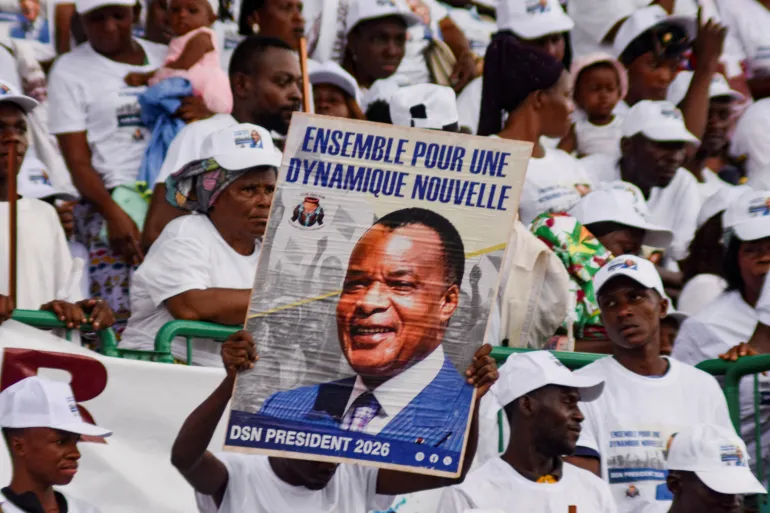
Supporters of outgoing President Denis Sassou Nguesso, who is running for re-election, take part in a campaign rally before the March 15 presidential election, in Brazzaville, Congo Republic, March 7, 2026 [Roch Bouka/Reuters]
Voters in the Republic of Congo headed to the polls Sunday in a presidential election widely expected to extend President Denis Sassou Nguesso’s decades-long rule, with limited opposition and little uncertainty about the result.
Polling stations opened at 7 a.m. local time and are scheduled to close at 6 p.m., giving more than 3.2 million registered voters the opportunity to cast ballots in the Central African nation.
Sassou, 82, has ruled the oil-rich country for nearly 42 years after first taking power in 1979. He governed continuously until 1992, returned to power in 1997 following a civil conflict and has remained president ever since.
According to election authorities, provisional results are expected within 48 to 72 hours after voting ends.
Analysts say turnout may fall below the nearly 68 percent recorded in the previous presidential election in 2021, when Sassou secured 88.4 percent of the vote.
Opposition weakened by boycotts and arrests
Sassou faces six challengers, most of them little-known political figures who analysts say are unlikely to mount a serious challenge against the incumbent.
The campaign has highlighted a stark imbalance between the president and his opponents. Sassou was the only candidate to travel extensively across the country to campaign, with streets in the capital, Brazzaville, lined with posters and banners bearing his image.
Two major opposition parties are boycotting the election, citing alleged irregularities and an uneven political playing field. Some of the country’s most prominent opposition figures remain in prison or in exile.
Congo’s electoral bodies are largely dominated by allies of the ruling Congolese Labour Party, further raising concerns among critics about the fairness of the vote.
According to global watchdog Freedom House, the Republic of Congo scores 17 out of 100 in its global freedom index, placing it among the most politically restrictive countries.
For background on governance trends in the region, see analysis from the Brookings Institution Africa Program.
Citizens skeptical about political change
Some voters say they see little prospect for change regardless of the outcome.
Gilbert, a 44-year-old civil servant in Brazzaville, said he supplements his salary with odd jobs to support his household.
“At my age, believing these elections will change our daily lives would be almost suicidal,” he said. “I’ve known practically the same leader all my life.”
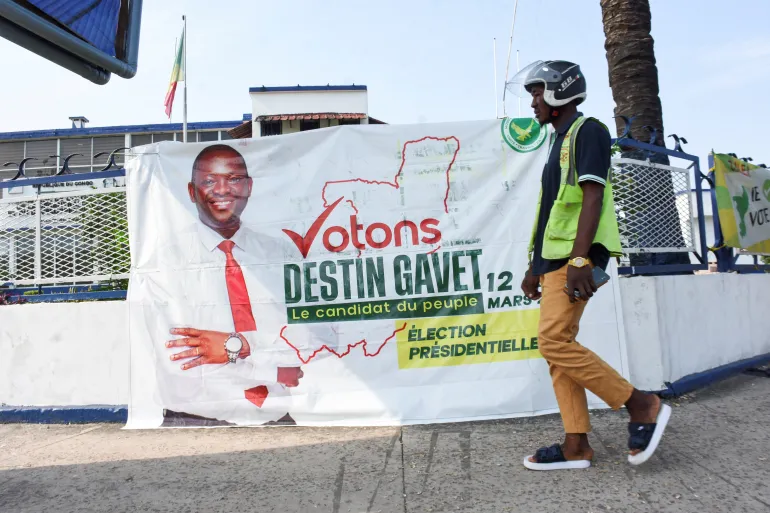
“It’s an election whose outcome is known in advance,” he said. “I don’t expect things to improve.”
Human rights groups say political space in Congo has narrowed in recent years, citing arrests of activists and suspensions of opposition parties.
Prime Minister Anatole Collinet Makosso has rejected accusations of bias, insisting that electoral institutions will ensure a transparent vote.
Oil wealth contrasts with widespread poverty
The Republic of Congo is the third-largest oil producer in sub-Saharan Africa and also exports liquefied natural gas, making hydrocarbons the backbone of its economy.
After years of economic downturn, the country’s finances have stabilized, though living conditions remain difficult for many citizens.
According to the World Bank, about 52 percent of the nation’s 6.1 million people live in poverty.
During the campaign, Sassou promised to accelerate development projects and expand access to education and vocational training.
For many voters, however, the election is less about new promises and more about the continuation of a political era that has defined the country for generations.
